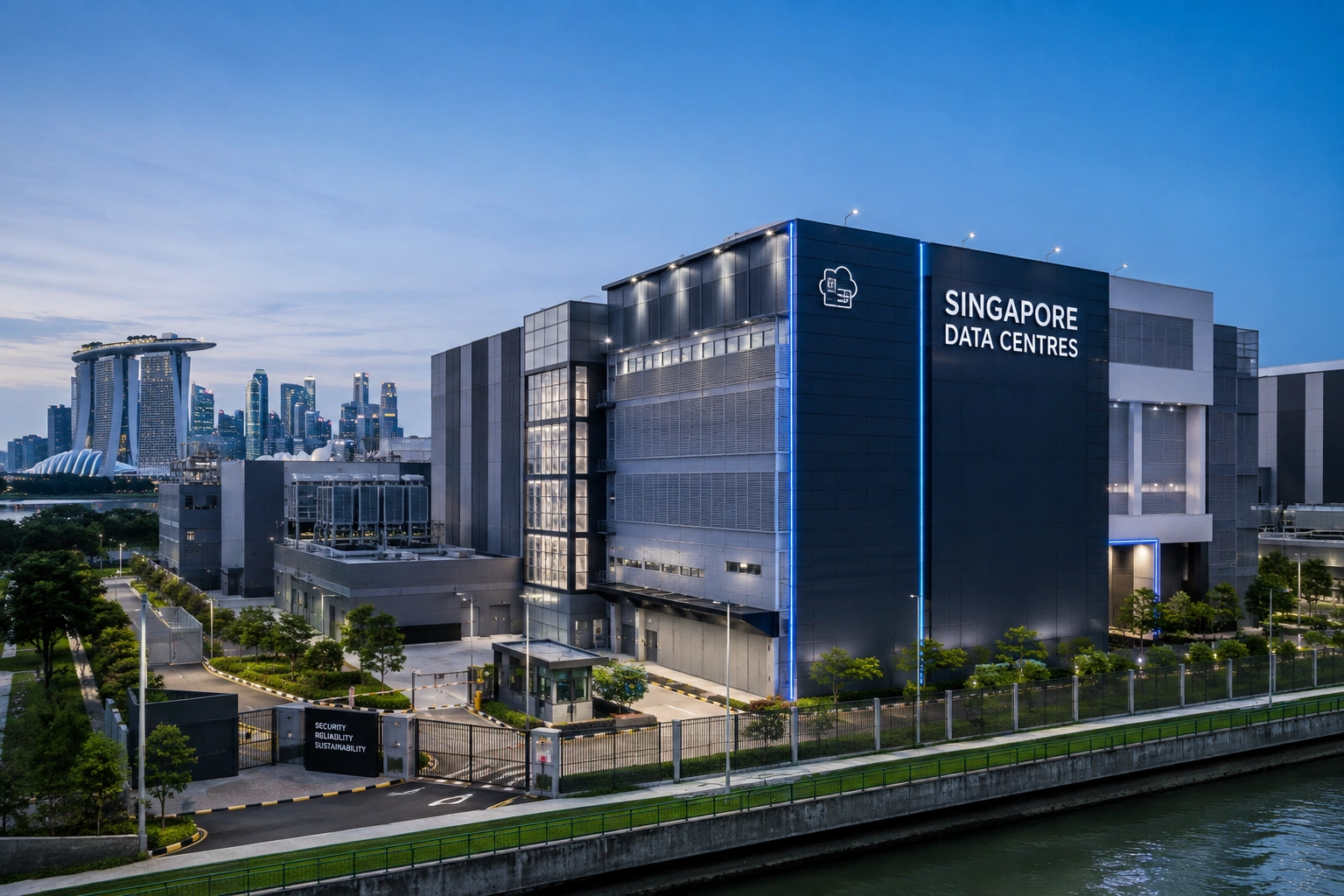
Singapore Data Centres: Market, AI, Capacity & Future 2026
Singapore Data Centres are at the heart of the country’s digital infrastructure, supporting cloud computing, AI, online services and business systems. Growing demand for digital services is pushing the market toward larger, smarter and more energy-efficient facilities.
Singapore’s data centre sector is also facing limits around land, power and sustainability. This makes AI-ready infrastructure, advanced cooling and efficient energy use important parts of its next stage of growth. This guide looks at the market, major companies, capacity, technology, challenges and future of data centres in Singapore.
Singapore Data Centres at a Glance
- Market: Singapore has become a major regional base for cloud computing, AI and digital services, with 70+ data centres and around 1.4 GW of total capacity.
- Major operators: The market includes large data centre companies serving cloud, colocation, enterprise and AI workloads.
- Capacity & demand: Demand is rising as businesses expand cloud services and AI computing. The government has made at least 200 MW of additional capacity available through its latest data centre application programme.
- AI impact: AI workloads need high-performance computing, GPUs and greater power and cooling capacity, pushing demand for AI-ready data centres.
- Sustainability: Limited land and energy resources make efficient cooling, lower energy use and green power important for future data centre growth.
- Future: Singapore is moving toward higher-density, AI-ready and lower-carbon facilities while keeping new capacity tied to sustainability and infrastructure limits
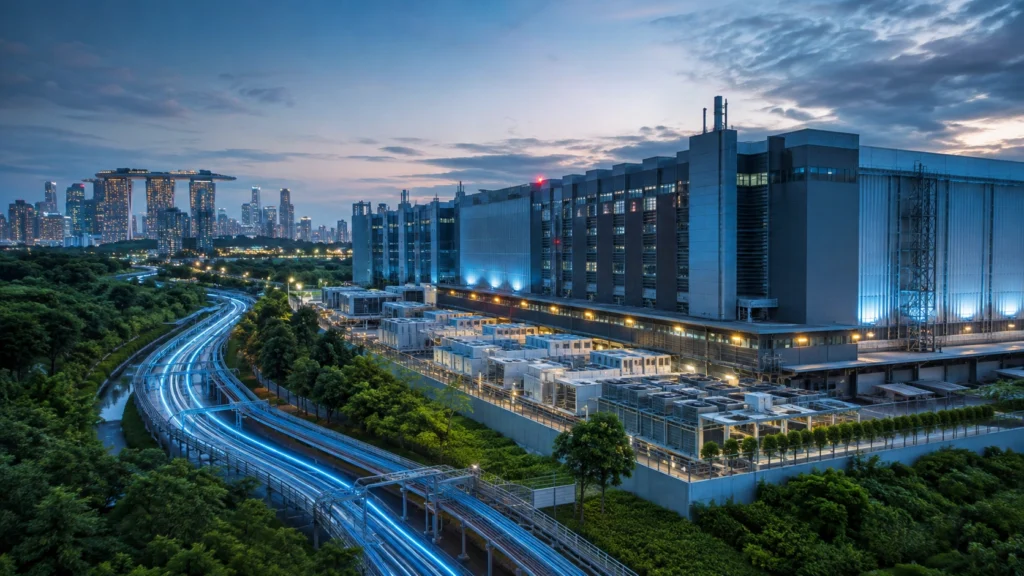
What Are Singapore Data Centres?
Singapore data centres are physical facilities that house servers, storage systems, networking equipment and other technology used to store, process and transfer data. They support everyday services such as cloud computing, online platforms, business applications and digital transactions.
A typical data centre infrastructure includes powerful servers for computing, storage systems for handling data, network equipment for connectivity, plus power and cooling systems that keep the facility running safely. For businesses and cloud providers, these data centre facilities provide the space and infrastructure needed to keep digital services available and connected.
Singapore’s strong internet connectivity and advanced IT infrastructure have helped make data centres in Singapore an important part of its digital economy.
Why Is Singapore a Data Centre Hub?
Why is Singapore a data centre hub? Singapore is a major data centre hub because of its central Asian location, strong fibre connectivity, reliable internet, growing cloud demand and well-developed digital economy.
Strategic Location
Singapore connects major Asian markets, making it a practical base for companies serving Southeast Asia and nearby regions.
Fibre Connectivity
Strong fibre connectivity and submarine cable links help data centres move large amounts of information quickly and reliably.
Internet Connectivity
Singapore’s reliable internet infrastructure supports businesses that depend on fast access to cloud platforms, websites and digital services.
Cloud Computing Demand
Growing use of cloud platforms, AI and online applications is increasing demand for local computing and storage capacity.
Digital Economy
Singapore’s digital economy creates steady demand for data centres through fintech, e-commerce, software and digital payments.
Business Infrastructure
Reliable power, telecommunications and business facilities give data centre operators the infrastructure needed for large-scale operations.
Regional Digital Services
Singapore supports digital services across Southeast Asia, making its data centre connectivity valuable for regional businesses and technology providers.
Singapore Data Centre Market in 2026
The Singapore data centre market 2026 remains one of Asia’s most important digital infrastructure markets. Strong enterprise demand, cloud adoption and AI workloads are supporting continued interest, while land, power and sustainability limits are keeping supply under pressure.
Current Market Position
Singapore remains a key data centre location in Southeast Asia, serving both local companies and regional digital businesses.
Singapore Data Centre Capacity
Available Singapore data centre capacity is expanding through new facilities, upgrades and higher-density infrastructure designed for modern workloads.
Singapore Data Centre Demand
Demand is being driven by cloud services, AI, fintech, streaming and businesses that need reliable computing close to regional users.
Singapore Data Centre Market Growth
Singapore data centre market growth is expected to remain closely linked to cloud adoption, AI infrastructure and Southeast Asia’s expanding digital economy.
New Development
New projects are increasingly focused on energy efficiency, higher computing density and better use of limited land and power resources.
Investment
Data centres continue to attract investment from operators, technology companies and infrastructure investors seeking exposure to Southeast Asia’s digital growth.
Supply Constraints
Limited land, electricity availability and sustainability requirements can restrict how quickly new data centre capacity comes online.
2026 Industry Trends
Key Singapore data centre market 2026 trends include AI-ready facilities, higher power density, energy-efficient cooling, renewable energy sourcing and stronger demand for cloud infrastructure.
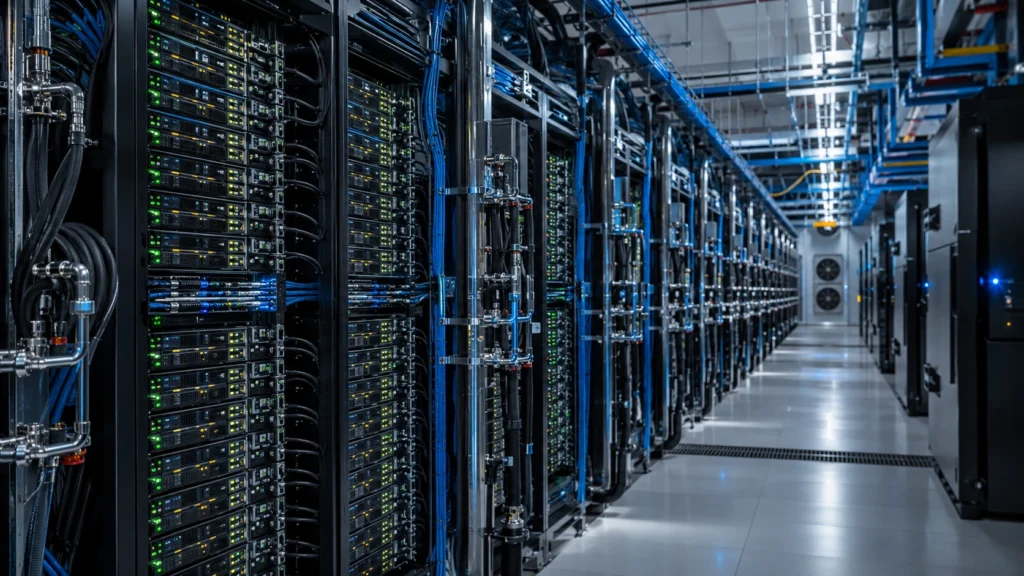
Major Data Centre Companies in Singapore
Who are the largest data centre operators in Singapore? Major operators include Equinix, Digital Realty, ST Telemedia Global Data Centres, Keppel Data Centres, Nxera and AirTrunk. These companies support colocation, cloud connectivity, hyperscale infrastructure and high-density computing across Singapore’s data centre market.
| Data Centre Operator | Main Focus | Typical Services | Market Role |
| Equinix | Colocation | Connectivity, cloud access | Interconnection |
| Digital Realty | Colocation | Cloud and network services | Enterprise infrastructure |
| STT GDC | Colocation | Hosting, connectivity | Regional operator |
| Keppel Data Centres | Colocation & hyperscale | Data centre infrastructure | Major local operator |
| Nxera | AI & hyperscale | Cloud, high-density computing | Growing AI infrastructure |
| AirTrunk | Hyperscale | Large-scale infrastructure | Hyperscale provider |
Types of Data Centres in Singapore
Singapore has different types of facilities to support cloud services, business systems, AI workloads and low-latency applications. The main categories include colocation, hyperscale, enterprise, AI and edge data centres.
Colocation Data Centres
Colocation Singapore facilities allow businesses to rent space, power and cooling instead of building their own facility. They also provide strong network and connectivity options.
Hyperscale Data Centres
Hyperscale data centres are built for large cloud providers and platforms that need huge amounts of computing, storage and power.
Enterprise Data Centres
Enterprise data centres provide dedicated infrastructure for organisations that need greater control over their servers, applications, security and data.
AI Data Centres
AI data centres use high-density racks and GPU-based computing to handle artificial intelligence, machine learning and other demanding workloads.
Edge Data Centres
Edge facilities place computing resources closer to users, helping cloud data centres and digital services deliver lower latency for applications that need fast responses.
How Much Data Centre Capacity Does Singapore Have?
How much data centre capacity does Singapore have? Singapore has more than 1.4 GW of data centre capacity as of February 2026, supporting cloud platforms, enterprise systems, digital services and growing AI workloads.
Current Capacity
Singapore has crossed 1,400 MW of data centre capacity, making it a major digital infrastructure market in Asia.
MW Terminology
MW (megawatts) shows the amount of power a data centre can support. A larger MW capacity generally means the facility can accommodate more computing equipment.
IT Load
IT load refers to the power used by servers, storage and networking equipment. It gives a clearer idea of the computing capacity inside a facility.
Existing vs Upcoming Capacity
- Existing capacity: Data centres already operating.
- Upcoming capacity: New facilities and expansions planned or under development.
Why Capacity Alone Doesn’t Tell the Whole Story
MW is only one measure. Power availability, cooling, rack density, connectivity and available space also determine how useful that capacity is for modern workloads.
Where Are Data Centres Located in Singapore?
Where are data centres located in Singapore? Data centres are mainly concentrated in industrial and business-friendly areas where power, fibre networks, land and connectivity are easier to support.
Major Data Centre Clusters
- Tampines: An established area for data centre facilities with access to major fibre and power infrastructure.
- Jurong: Industrial land and strong infrastructure make the western region suitable for larger facilities.
- Woodlands: Its northern location provides another important area for data centre development.
Industrial Areas
- Industrial zones offer larger plots and infrastructure suited to high-power facilities.
- They also reduce competition with residential and commercial land uses.
Connectivity Considerations
- Data centres need strong fibre routes and reliable connections to networks and cloud providers.
- Proximity to major connectivity routes helps reduce latency and improve service reliability.
Power Availability
- Large data centres require substantial and stable electricity supplies.
- Access to available power can influence where new facilities are developed.
Land Constraints
- Singapore has limited land, so suitable sites for large data centres are highly competitive.
- This makes efficient land use and higher-density facilities increasingly important.
How AI Is Changing Singapore Data Centres
AI is changing AI data centres Singapore by increasing demand for GPU computing, high-density racks and stronger cooling systems. New facilities are being designed with AI infrastructure Singapore needs in mind, including higher power capacity and liquid cooling.
AI Workloads
AI models require powerful GPUs and large amounts of computing capacity, pushing data centres towards higher-density infrastructure.
GPU Computing
GPU data centres Singapore are becoming more important as AI training and inference require faster parallel processing than traditional workloads.
High-Density Computing
AI servers generate more heat and use more power per rack, so facilities need higher rack densities and stronger cooling systems.
AI Infrastructure
AI infrastructure includes GPUs, high-speed networking, storage, power systems and cooling designed to handle demanding AI workloads.
AI-Ready Facilities
AI-ready data centres Singapore are being developed with higher power density, stronger electrical systems and advanced cooling to support future AI growth.
Increased Power Demand
AI workloads can require significantly more power than conventional computing, increasing pressure on electricity supply and data centre capacity.
Advanced Cooling
Traditional air cooling becomes less effective as rack densities rise. Data centres are therefore exploring more advanced thermal management systems.
Liquid Cooling
Liquid cooling data centres Singapore use liquid to remove heat directly from high-performance computing equipment, allowing dense GPU systems to operate more efficiently.
Why Do AI Workloads Need More Data Centre Power?
AI workloads use large GPU clusters that operate continuously during training and inference.
- More GPUs per rack
- Higher processing intensity
- Greater cooling requirements
What Is Liquid Cooling?
Liquid cooling transfers heat away from servers more efficiently than conventional air-based systems.
- Handles high-density GPU racks
- Improves heat removal
- Supports higher computing density
Are Singapore Data Centres Becoming AI-Ready?
Yes. Singapore’s data centre sector is increasingly preparing for AI workloads through higher-density facilities, stronger power infrastructure and advanced cooling technologies.
Data Centre Cooling, Power and Energy Use
Singapore’s hot and humid climate makes data centre cooling a major operational requirement, especially as high-density racks and AI workloads generate more heat. Facilities need efficient cooling systems to maintain stable temperatures while controlling data centre energy efficiency and overall power use.
Data centre power is equally important because servers, GPUs, cooling systems and other equipment require a constant electricity supply. Strong Singapore data centre power supply, efficient infrastructure and technologies such as liquid cooling can help reduce wasted energy while supporting higher computing density.
How Sustainable Are Singapore Data Centres?
Are Singapore data centres sustainable? Singapore is improving data centre sustainability Singapore through better energy efficiency, renewable energy use and more efficient cooling systems. These measures help reduce electricity consumption, carbon emissions and water use.
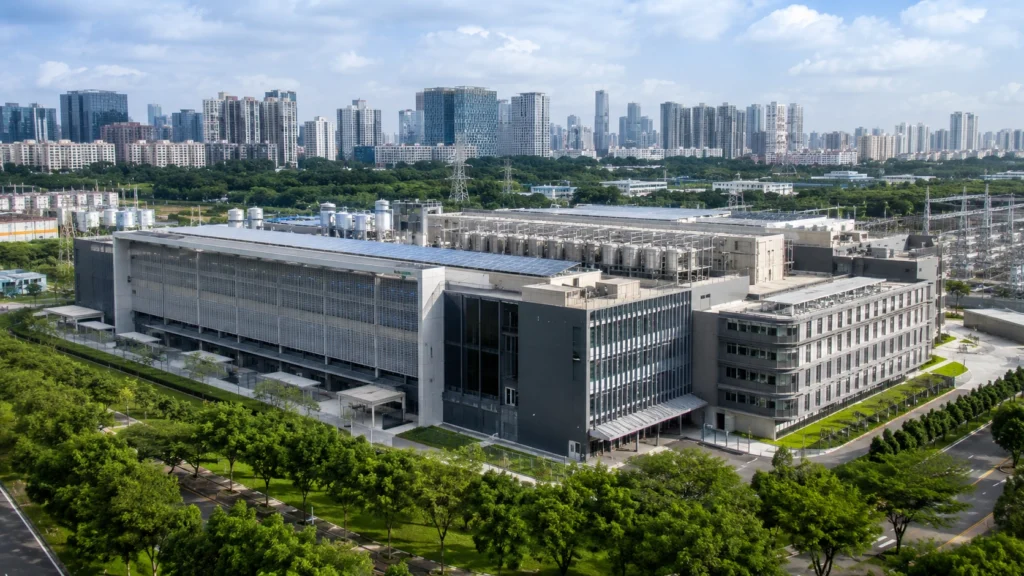
The government also expects new projects to meet stronger efficiency standards. As a result, green data centres Singapore are increasingly focusing on efficient cooling, lower power consumption and sustainable technologies.
Singapore Data Centre Regulations and Government Policy
Singapore’s data centre government policy aims to grow the sector while managing limited land, electricity and environmental resources. New developments are increasingly assessed on efficiency, sustainability, security and infrastructure resilience.
Key policy considerations include:
- Power and land: New capacity must work within Singapore’s limited resources.
- Sustainability: Energy and cooling efficiency are important for new developments.
- Security: Data centres need strong physical and digital protection.
- Resilience: Reliable power, networks and backup systems help maintain operations.
- Controlled growth: Government policy supports data centre expansion without placing excessive pressure on national infrastructure.
What Challenges Are Singapore Data Centres Facing?
Singapore’s data centres face pressure from limited land, power demand, cooling needs and sustainability targets. The rapid growth of AI is making these challenges more important.
- Limited land and power availability
- High energy and cooling costs
| Data Centre Type | Main Users | Computing Need | Cooling Need | Typical Purpose |
| Colocation | Businesses | Medium–High | Medium–High | Shared hosting |
| Hyperscale | Cloud providers | Very High | High | Large-scale computing |
| Enterprise | Large companies | Medium–High | Medium | Dedicated IT |
| AI-focused | AI companies | Very High | Very High | GPU & AI workloads |
| Edge | Digital services | Low–Medium | Low–Medium | Low-latency processing |
Future of Singapore Data Centres
The future of Singapore data centres will be shaped by AI workloads, cloud growth and the need for higher-density computing. At the same time, power limits and sustainability requirements will push operators towards efficient infrastructure, advanced cooling and carefully planned new capacity.
- AI-driven demand: More GPU-based workloads will increase demand for AI-ready facilities.
- Cloud growth: Growing cloud adoption will continue supporting Singapore data centre growth.
- High-density computing: New facilities will need to handle more computing power in smaller spaces.
- Liquid cooling: Advanced cooling will become more important for high-density AI servers.
- Sustainable infrastructure: Energy efficiency and lower resource use will remain key priorities.
- New capacity: Singapore data centre development 2026 is expected to focus on efficient, high-value capacity rather than unlimited expansion.
- Power constraints: Limited electricity supply will remain one of the biggest factors affecting future projects.
Will Singapore Remain a Data Centre Hub?
Yes, Singapore is likely to remain a major data centre hub in Asia, but future growth will depend on how effectively the country manages power, land and sustainability limits. Its strong connectivity, digital economy and regional position continue to support demand.
Singapore Data Centres: Key Facts to Know
1 Market: Singapore is a major data centre hub in Southeast Asia.
2 Capacity: More than 1.4 GW of data centre capacity is available as of February 2026.
3 Major operators: Equinix, Digital Realty, STT GDC, Keppel, Nxera and AirTrunk.
4 AI trend: AI is increasing demand for GPUs, high-density racks and advanced cooling.
5 Main challenge: Limited land and power availability can restrict future expansion.
6 Sustainability focus: Operators are improving energy and cooling efficiency.
7 Future direction: Growth is moving towards AI-ready, high-density and energy-efficient facilities.
What’s Next for Singapore Data Centres?
Singapore’s data centre industry is moving into a new phase shaped by AI, cloud computing and rising digital demand. Its strong connectivity, business infrastructure and regional position give it a solid advantage, but limited land, power availability and sustainability requirements will shape how far the market can grow. The future will likely focus less on simply adding capacity and more on building AI-ready, energy-efficient and high-performance data centres.