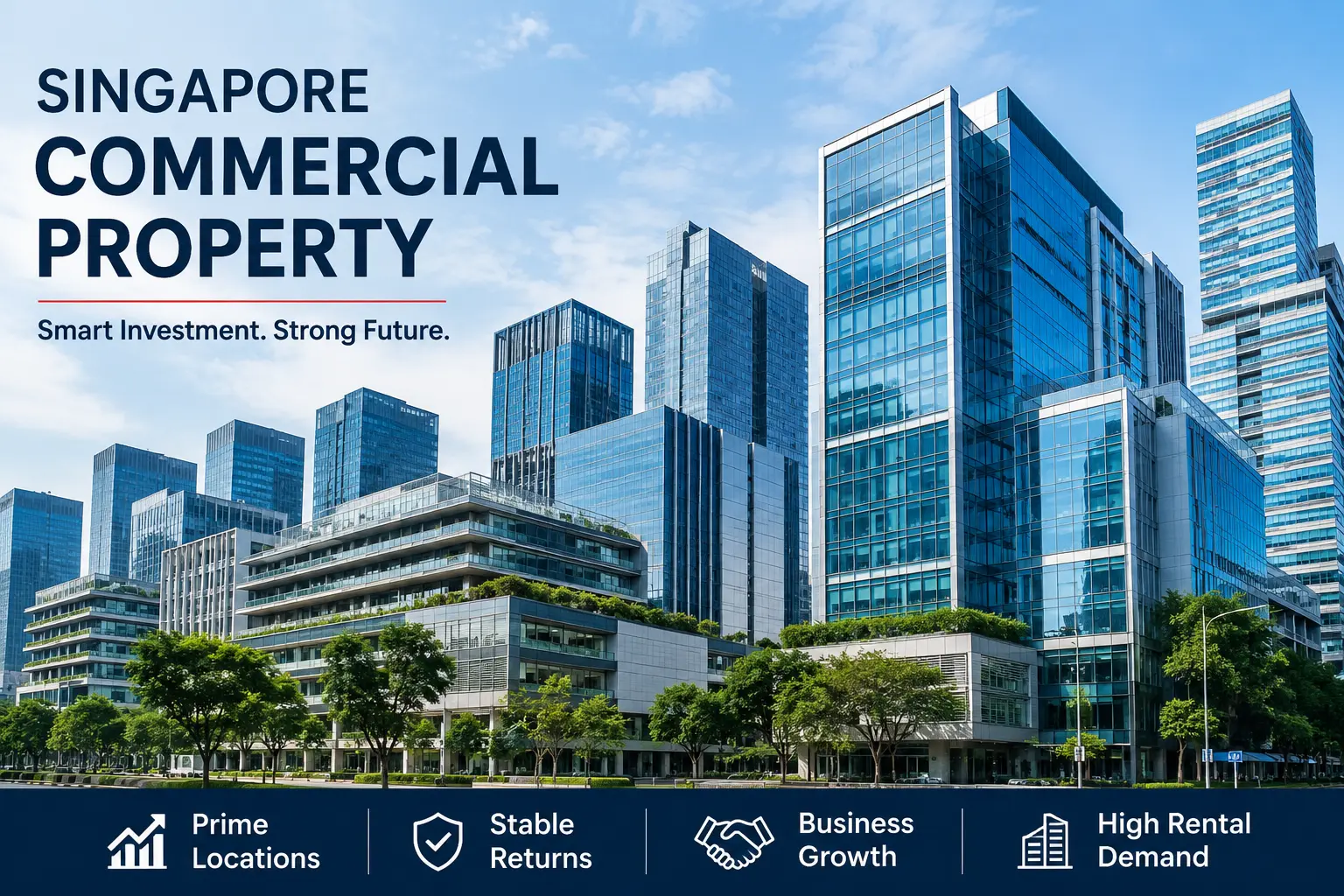
Singapore Commercial Property: 10 Things Every Investor and Business Owner
Singapore commercial property continues to attract local and international investors—and it’s not hard to see why. The country offers a stable economy, transparent regulations, world-class infrastructure, and one of Asia’s strongest business environments.
Whether you’re looking for an office, retail shop, warehouse, or investment property, Singapore offers opportunities for businesses of every size. But buying commercial real estate isn’t quite the same as purchasing a residential home. There are different financing rules, lease structures, maintenance costs, and investment considerations to understand.
If you’re planning to invest or expand your business, this guide walks you through the most important things you should know before making a decision.
1. Why Singapore Commercial Property Remains in High Demand
Commercial properties have remained attractive because Singapore is a global financial and business hub. Thousands of multinational corporations, startups, logistics companies, retailers, and manufacturers operate here.
Demand is supported by several factors:
- Stable political environment
- Strong legal framework
- High foreign investment
- Excellent transportation network
- Limited land supply
- Consistent business activity
And unlike many markets that experience dramatic swings, Singapore’s commercial property sector has historically shown resilience over the long term.
2. Types of Singapore Commercial Property
Not all commercial properties serve the same purpose. Choosing the right type depends on your business goals and investment strategy.
Office Spaces
Office buildings range from Grade A towers in the Central Business District (CBD) to smaller business parks and suburban offices.
They are suitable for:
- Corporate headquarters
- Professional firms
- Technology companies
- Consulting businesses
Premium offices generally command higher rental rates but often attract established tenants.
Retail Shops
Retail properties include:
- Shopping mall units
- Street-front shops
- Boutique retail spaces
- Food and beverage outlets
Location matters more than almost anything else. A busy shopping district can significantly increase customer traffic.
Industrial Properties
Industrial spaces include:
- Warehouses
- Factories
- Logistics centres
- Business parks
- Light industrial units
These properties often appeal to manufacturing, e-commerce, and logistics businesses.
Mixed-Use Developments
Many newer developments combine offices, retail outlets, restaurants, and residential units within one integrated project.
This creates convenience for both businesses and customers.
3. Benefits of Investing in Singapore Commercial Property
Commercial real estate offers several advantages over other investment options.
Higher Rental Returns
Commercial properties often provide better rental yields compared to residential homes.
Although returns vary by location and property type, investors generally appreciate the stronger income potential.
Longer Lease Agreements
Business tenants frequently sign leases lasting three to five years—or even longer.
This can provide more predictable rental income.
Growing Business Demand
As Singapore continues attracting international companies, demand for quality commercial spaces remains healthy.
New industries like fintech, biotechnology, artificial intelligence, and logistics are also creating fresh opportunities.
4. Prime Commercial Property Locations
Location has always been one of the biggest drivers of commercial property value.
Popular business districts include:
- Marina Bay
- Raffles Place
- Orchard Road
- Tanjong Pagar
- Bugis
- Novena
- Jurong East
- One-North
- Paya Lebar
- Changi Business Park
Each location serves different industries.
For example, finance companies often prefer the CBD, while technology firms may choose One-North.
Retail businesses usually benefit from areas with heavy pedestrian traffic.
5. Factors That Affect Commercial Property Prices
Several elements influence property values.
Accessibility
Buildings located near MRT stations and major expressways generally attract higher demand.
Building Age
Newer developments often feature modern facilities, energy-efficient systems, and better amenities.
Older buildings may offer larger floor plates but could require renovation.
Tenant Demand
Areas with strong business activity tend to maintain higher occupancy rates.
Vacancy levels directly affect rental income and long-term value.
Government Planning
Urban redevelopment and infrastructure improvements can significantly influence future prices.
Sometimes an upcoming MRT station changes an area’s investment potential almost overnight.
6. Financing Commercial Property
Commercial property financing differs from residential mortgages.
Banks usually consider:
- Business income
- Property valuation
- Loan-to-value ratio
- Borrower’s financial history
Down payments are generally higher than residential purchases.
Interest rates may also differ depending on market conditions.
Before making an offer, it’s worth obtaining financing approval so you understand your budget clearly.
7. Common Costs Beyond the Purchase Price
Many first-time buyers focus only on the property price.
But there are additional expenses.
These may include:
- Legal fees
- Valuation fees
- Stamp duties
- Renovation costs
- Maintenance charges
- Property taxes
- Insurance
- Agent commissions
Planning for these costs helps prevent unpleasant surprises later.
8. Risks Every Investor Should Understand
No investment comes without risks.
Commercial property is no exception.
Potential challenges include:
Vacancy Periods
Finding suitable tenants may take time.
Long vacancies reduce rental income.
Market Cycles
Property values rise and fall depending on economic conditions.
Patience is often important.
Changing Business Trends
Remote work, e-commerce, and digital transformation have changed how businesses use commercial spaces.
Flexible layouts and adaptable buildings are becoming increasingly valuable.
Still…quality properties in strong locations tend to perform better over time.
9. Tips for Choosing the Right Commercial Property
Before purchasing, ask yourself several questions.
- Is the location convenient?
- Who are the target tenants?
- What are the future development plans nearby?
- Does the property suit changing business needs?
- What is the expected rental yield?
- Are maintenance costs reasonable?
And don’t rush.
Comparing multiple properties often leads to better investment decisions.
A little patience today can save significant money tomorrow.
10. Is Singapore Commercial Property Still a Good Investment?
For many investors, the answer remains yes.
Singapore continues to rank among Asia’s safest and most attractive property markets.
Its strong economy, limited land supply, transparent legal system, and global reputation support long-term confidence.
Of course, every investment should match your financial goals, risk tolerance, and investment timeline.
Some buyers prioritize steady rental income.
Others focus on long-term capital appreciation.
Many successful investors combine both strategies.
The key is choosing the right property rather than simply buying the first attractive listing.
Final Thoughts
Singapore commercial property continues to offer exciting opportunities for business owners and investors alike. Whether you’re purchasing an office, retail unit, warehouse, or mixed-use property, careful planning makes all the difference.
Research the location, understand the costs, evaluate tenant demand, and think long term. Commercial real estate isn’t about making quick profits—it often rewards patience, informed decisions, and selecting quality assets in strong business districts.
As Singapore’s economy continues to evolve, well-positioned commercial properties are likely to remain an important part of many successful investment portfolios. And if you take the time to understand the market before buying…you’re already a step ahead.