
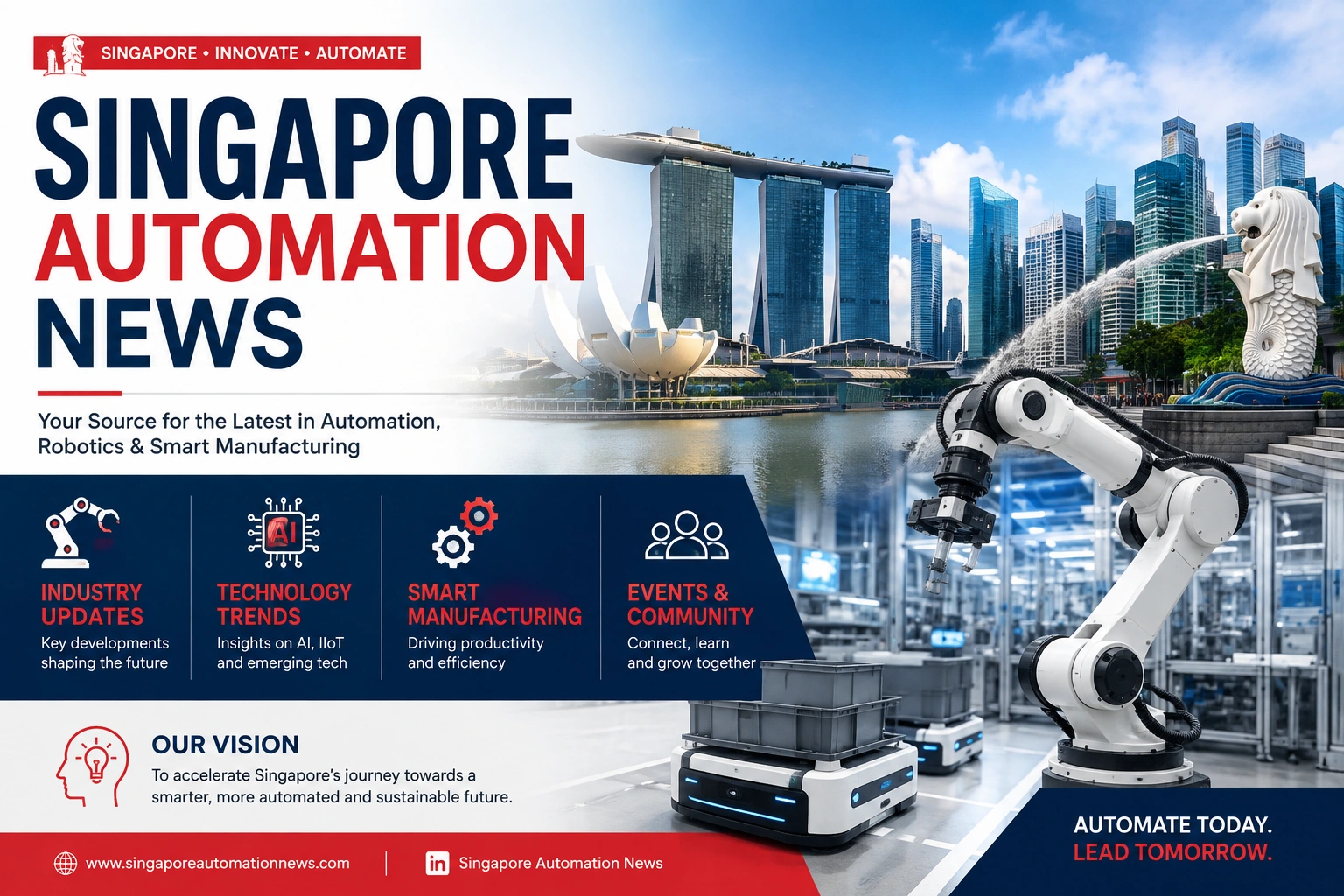
Singapore Automation News: Robotics, AI & Industry Updates 2026
Singapore Automation News is closely tied to the country’s growing use of robotics, artificial intelligence and smart machines across different industries. Automation is no longer limited to large factories. Companies in manufacturing, logistics, construction, warehousing and other sectors are testing machines that can handle repetitive work, inspect products, move materials and support daily operations.
Singapore has built a strong base for industrial automation, supported by advanced manufacturing, technology investment and a skilled workforce. In 2026, the focus is moving toward AI-powered systems that can respond to changing conditions instead of simply repeating fixed instructions.
Robotic arms, autonomous mobile robots, machine vision and AI software are becoming part of modern business operations. At the same time, newer areas such as physical AI and humanoid robotics are attracting attention.
These developments make automation an important part of Singapore’s technology and business story in 2026. The next stage will be about how companies use these machines alongside people, and how robotics moves from controlled industrial settings into more everyday environments.
TL;DR: Singapore Automation News
- Singapore is expanding the use of robots and AI across manufacturing, logistics and construction.
- Factories are adopting machine vision, robotic systems and AI-based production tools.
- Autonomous mobile robots are gaining attention in warehouses and industrial facilities.
- Construction companies are testing machines for repetitive and physically demanding work.
- Physical AI and humanoid robotics are emerging areas of interest in Singapore.
- Human workers remain important for supervision, maintenance, planning and complex tasks.
Singapore Automation News: What Is Happening in 2026?
Singapore’s automation in 2026 is expanding across manufacturing, logistics, construction, warehousing, and services. Companies are using machines to cut repetitive work and let people focus on skilled tasks.
AI is reshaping automation. Instead of fixed movements, modern robots use sensors, cameras, and software to detect objects and adapt in real time, boosting AI automation Singapore in controlled environments.
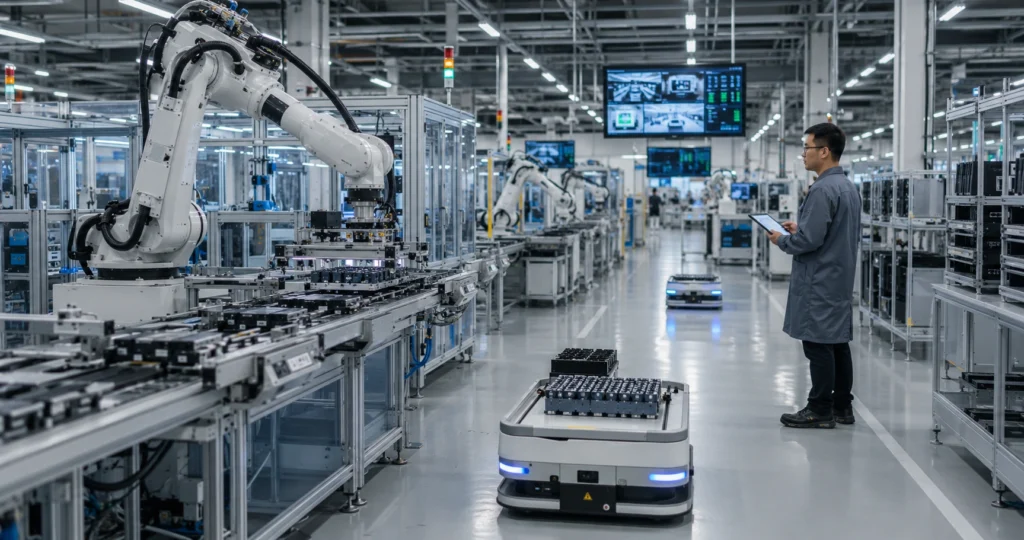
Manufacturing is advancing with robotic assembly, inspection, and material handling. Machine vision detects defects, robotic arms handle repetitive production, and automated vehicles move parts within facilities.
Logistics and warehousing are also growing fast. Autonomous robots transport goods, while smart storage and sorting systems manage large volumes efficiently.
Construction is adopting robotics for structural, architectural, and MEP work, showing automation is moving beyond factories into real-world job sites.
Robotics is increasingly linked with AI research. Physical AI systems and humanoid robots are being tested in Singapore to work in human environments and interact with the physical world.
Overall, Singapore Automation News in 2026 is not just about more robots, but smarter systems that sense, adapt, and connect across operations—while humans remain essential for oversight, safety, and decision-making.
How Automation Is Changing Singapore Industries
Automation is changing the way Singapore businesses handle repetitive tasks, production work and daily operations. Robots and software can now support activities that once depended heavily on manual labour. The change is visible in factories, warehouses, construction sites and customer-facing businesses.
Manufacturing
Manufacturing is the core of Singapore automation. Robots do assembly, packing, moving parts, and other repeat work. Inspection systems check products during production, not only at the end.
Electronics, semiconductor, automotive, and precision firms use these systems because they need high accuracy and steady output. Robots help when the same task repeats many times.
Factories also link machines with software. This helps track output, machine status, and quality in real time.
Logistics and Warehousing
Singapore’s trade role needs fast warehouse work. Automation helps in sorting, storing, picking, and moving goods.
AMRs (Autonomous Mobile Robots) move items between zones without human driving. Smart storage systems find and retrieve goods using digital commands.
Workers still play a role. They monitor systems, handle special cases, and maintain equipment.
Construction
Construction uses automation for heavy and repeat tasks. Sites involve lifting, drilling, cleaning, and material handling.
Robots and smart tools improve speed and consistency. They also reduce physical strain on workers.
Singapore uses these systems to improve productivity and manage labour limits in tight urban projects.
Food and Service Businesses
Food and service sectors also use automation. Robots and machines help with cleaning, delivery, cooking support, and simple service tasks.
Service robots can move items or deliver food inside buildings. Smart kitchen tools help with basic preparation, while digital systems handle orders and payments.
People are still needed for service, quality control, and decision-making.
Singapore Robotics Industry Updates
Singapore robotics is moving from fixed machines to flexible systems. Robots are now used in factories, warehouses, and testing environments.
Industrial Robots
These robots handle repeat factory work like welding, assembly, packing, and sorting. They are best for stable, high-volume production.
Collaborative Robots
Cobots work safely near humans. They assist in assembly, loading, and inspection.
They are smaller, flexible, and fit well in shared workspaces.
Autonomous Mobile Robots
AMRs move materials inside facilities using sensors and mapping. They reduce manual transport work and improve flow in warehouses.
Humanoid Robots
Humanoid robots are shaped like humans. They are still in early testing in Singapore and not widely used yet.
Practical Uses in Singapore
Robots are used for:
- Assembly work
- Inspection
- Warehouse movement
- Picking and packing
- Construction support
- Cleaning
- Indoor delivery
- Monitoring systems
- Repetitive tasks
AI and Automation in Singapore Manufacturing
AI improves automation by adding data analysis and decision support. Machines now use sensors, cameras, and software to adjust performance.
AI-Powered Factories
Factories connect machines and systems to track output and performance. AI helps detect patterns and improve decisions.
Machine Vision
Cameras and software check products for size, shape, and defects. It is faster than manual inspection on high-speed lines.
Automated Quality Inspection
AI systems scan products and flag defects. Only selected items need human review, saving time and effort.
Predictive Maintenance
Sensors track machine health. AI detects early warning signs and helps prevent breakdowns.
Human + Machine Working Model
Automation does not replace people. Machines handle repeat work, while humans manage, monitor, and solve problems.
Engineers, technicians, and operators work with AI systems daily. Humans still make final decisions.
This balance of people and machines is key to Singapore’s automation future.
Automation in Singapore Construction
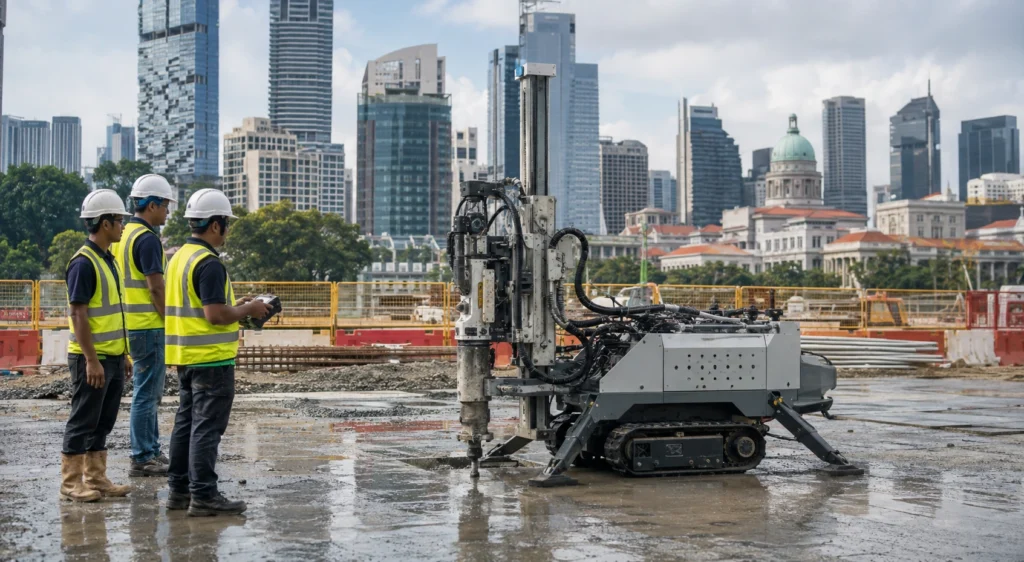
Singapore construction companies are turning to robotics for tasks that are repetitive, heavy or difficult to perform manually for long periods.
Construction Robotics
Robots can assist with drilling, lifting, cleaning, inspection and material handling. Singapore’s Building and Construction Authority has listed more than 20 robotics and automation solutions for construction work.
Automated Equipment
Automated tools can handle selected site tasks with consistent movement. This can reduce manual effort while allowing workers to focus on installation, supervision and technical work.
Repetitive Work
Tasks such as drilling, moving materials and repeated finishing work can take considerable time. Machines can handle suitable repetitive jobs while skilled workers manage work that requires judgement.
Worker Safety
Robotic equipment can reduce exposure to some physically demanding tasks. Safe operation still requires trained workers, equipment checks and proper site controls.
Productivity and Labour Challenges
Labour availability is one reason Singapore’s construction sector is exploring automation. The main challenge is finding tasks where machines can fit naturally into existing site operations without creating extra complexity.
Singapore Automation Trends to Watch in 2026
| Trend | Main Application | Use in 2026 |
| AI Robotics | Manufacturing & services | Smarter machine control |
| AMRs | Warehouses | Moving goods |
| Machine Vision | Factories | Quality checks |
| Construction Robots | Building sites | Repetitive work |
| Humanoid Robots | Research & pilots | Human-like tasks |
AI Robotics
AI gives robots the ability to process information from cameras and sensors before carrying out a task. This is useful for factories and controlled work environments.
Autonomous Mobile Robots
AMRs can move goods and components around warehouses without a driver. They are useful for internal transport and repeated movement.
Machine Vision
Machine vision uses cameras and software to check products for defects, size differences and incorrect positioning during production.
Construction Robots
Construction robots are being tested for drilling, cleaning, lifting, inspection and material handling. Their use is likely to grow where tasks are predictable and repeated.
Humanoid Robots
Humanoid robots remain an early-stage area in Singapore. Research and pilot projects are testing how these machines could operate around people and use spaces designed for humans.
Major Areas Driving Automation Growth in Singapore
Singapore’s automation growth is driven by labour needs, productivity targets and rising demand from manufacturing and logistics. Companies are using robots and automated systems for repetitive tasks, while workers focus on technical, supervisory and problem-solving roles. Electronics, semiconductor and precision manufacturing also rely on accurate production, making robotics and automated inspection useful across many facilities.
Technology investment is adding momentum to this shift. Businesses are adopting sensors, smart equipment and AI systems that can analyse production data, detect faults and respond to changing conditions. Singapore’s strong logistics sector is also supporting demand for automated storage, sorting systems and autonomous mobile robots that can move goods inside warehouses.
Benefits and Challenges of Automation in Singapore
Automation can help Singapore businesses handle repeated tasks faster and with more consistent results. Robots can reduce physical strain, while sensors and software give teams better visibility into production and equipment. This also gives skilled workers more time for technical work, supervision and problem-solving.
Benefits
- Faster handling of repetitive tasks
- Consistent production and inspection
- Less physical strain on workers
- Better equipment and production monitoring
- More time for skilled technical work
Challenges
Automation also brings costs and operational issues. Robots and software require upfront spending, regular maintenance and trained staff. Connected systems need strong cybersecurity, while machines working near people require proper safety controls. Businesses may also face difficulties when new equipment has to work with older machines and software.
What Is the Future of Automation in Singapore?
Singapore’s next phase of automation is likely to combine AI with machines that can operate in real environments. Physical AI may give robots better awareness of people, objects and surroundings, while humanoid robots could be tested for tasks in spaces designed for human workers.
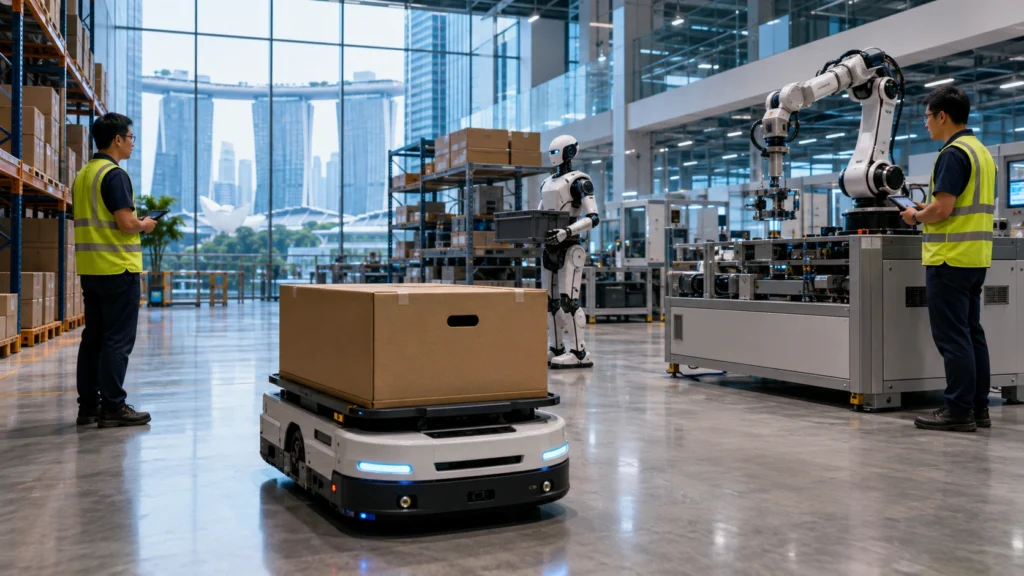
Smart factories, autonomous machines and AI-assisted workplaces are also likely to expand. Rather than removing people from production, many businesses may use a human-robot model where machines handle repetitive work and employees manage supervision, decisions, maintenance and complex tasks.
Singapore Automation vs Traditional Work Methods
Automation is changing how repetitive tasks are handled across Singapore businesses. Traditional methods still have a place, but automated systems can complete selected jobs with less manual effort and steady performance.
| Area | Traditional Method | Automated Method |
| Inspection | Manual checking | Machine vision |
| Material Movement | Workers | AMRs / robots |
| Assembly | Manual tools | Robotic systems |
| Warehouse Picking | Manual picking | Robotic picking |
| Construction Tasks | Manual equipment | Automated machinery |
The main difference is how work is divided. Automated systems take on repeatable tasks, while employees can focus on supervision, maintenance, quality decisions and jobs that need human judgement. The best approach depends on the task, workplace and cost of the technology.
Singapore Automation News FAQs
What is Singapore Automation News about?
It covers the latest AI, robotics and automation developments in Singapore.
The focus includes manufacturing, logistics, construction and services.
Which industries use automation in Singapore?
Manufacturing, logistics, warehousing and construction use automation widely.
Food, services and building operations are also adopting automated systems.
Is Singapore investing in robotics?
Yes, Singapore is supporting robotics research, testing and business adoption.
Manufacturing, construction and logistics are key areas for robotic use.
How is AI being used in Singapore automation?
AI helps machines with inspection, monitoring, control and fault detection.
It can also process data from cameras and sensors.
What are the major automation trends in Singapore in 2026?
Physical AI, AMRs, machine vision and smart factories are major trends.
Humanoid robots and human-robot collaboration are also gaining attention.
Singapore Automation News: What to Watch Next
Singapore’s automation sector is moving toward smarter robots, AI-powered factories and machines that can work alongside people. Physical AI, autonomous systems, machine vision and humanoid robots are areas to watch as more projects move from testing into practical use.
Manufacturing, logistics and construction are likely to remain major areas for automation growth. The focus will be on useful applications that improve daily operations while keeping skilled workers involved in supervision, maintenance and decision-making.