Singapore Public Facilities: 12 Essential Services That Make Everyday Life Easier
Singapore Public Facilities is often praised for its clean streets, efficient transport, and high quality of life. But behind all that is something people don’t always talk about enough—Singapore Public Facilities.
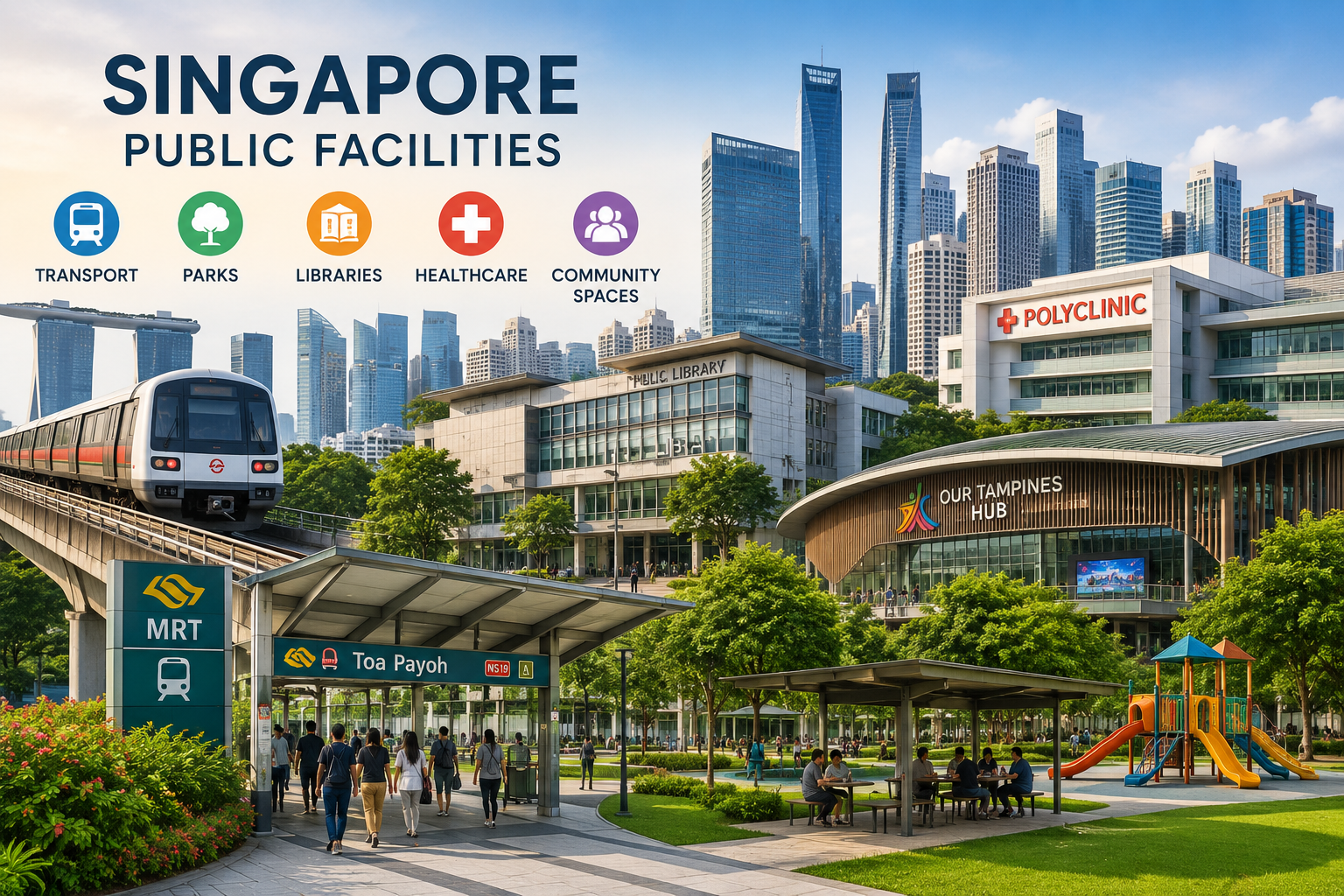
These facilities quietly support millions of residents every single day. Whether you’re taking the MRT to work, exercising at a neighborhood park, borrowing books from a library, or visiting a community club, you’re benefiting from a carefully planned public infrastructure.
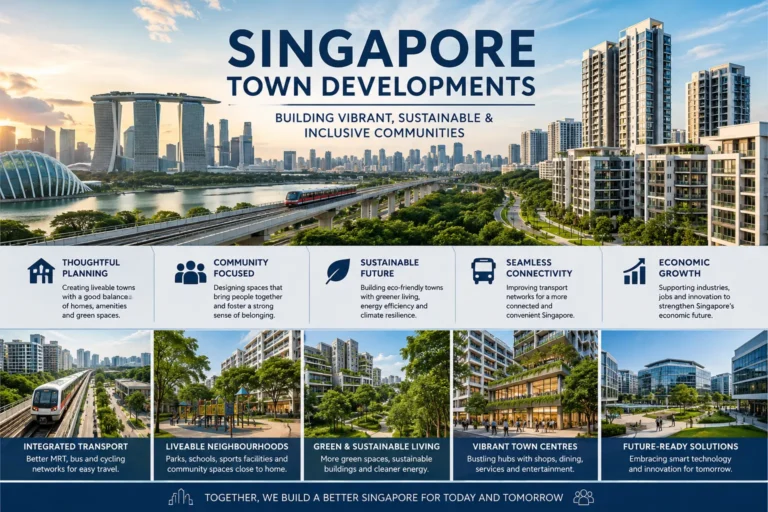
And that’s really what makes Singapore Public Facilities different. Everything feels connected.
If you’re new to the country—or simply curious about how Singapore keeps daily life running so smoothly—this guide covers the public facilities that truly matter.
1. Public Transportation Network
Ask anyone living in Singapore Public Facilities what they appreciate most, and public transport usually comes up within seconds.
The country has built one of the world’s most reliable transportation systems.
It includes:
- MRT stations across the island
- Extensive public bus routes
- Taxi stands
- Cycling paths
- Pedestrian walkways
Because services are frequent, many residents don’t even own a car. Traveling between neighborhoods is simple, affordable, and surprisingly fast.
New MRT lines continue expanding every year, making commuting even easier.
2. Public Parks and Green Spaces
Singapore isn’t called the “Garden City” by accident.
Despite being highly urbanized, green spaces are everywhere.
Popular public parks include:
- Gardens by the Bay
- East Coast Park
- Bishan-Ang Mo Kio Park
- MacRitchie Reservoir
- Singapore Public Facilities Botanic Gardens
These parks offer much more than pretty scenery.
Visitors can:
- Jog
- Cycle
- Picnic
- Birdwatch
- Kayak
- Exercise
- Enjoy family outings
Sometimes you almost forget you’re in one of Asia’s busiest cities.
3. Public Libraries
Singapore’s public libraries are modern, comfortable, and packed with resources.
They’re no longer just places to borrow books.
Today you’ll find:
- Digital collections
- Study rooms
- Children’s learning areas
- Makerspaces
- Community workshops
- Free Wi-Fi
Students, professionals, freelancers, and retirees all use these spaces daily.
And honestly…they’re some of the nicest libraries you’ll find anywhere.
4. Community Clubs and Community Centres
Every neighborhood has its own community spaces.
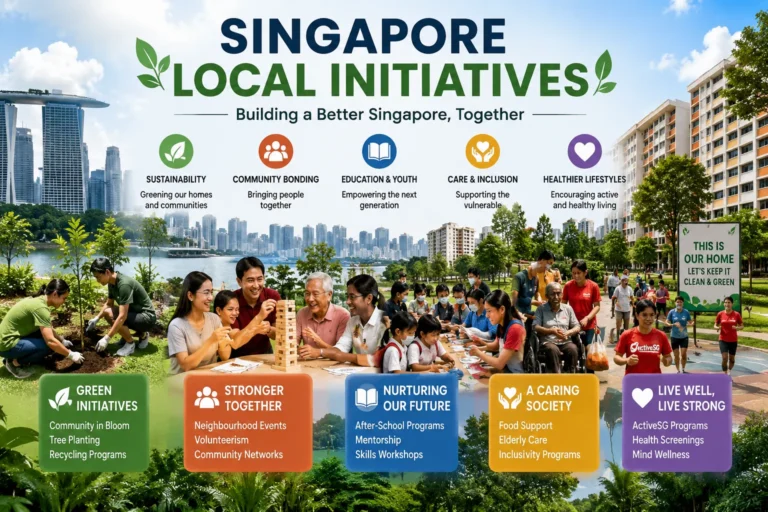
These centers bring people together through activities and events.
Common programs include:
- Fitness classes
- Cooking workshops
- Language lessons
- Dance sessions
- Youth activities
- Senior wellness programs
- Cultural celebrations
They’re designed to strengthen neighborhood connections while giving residents affordable ways to learn new skills.
5. Public Healthcare Facilities
Healthcare remains one of Singapore Public Facilities strongest public services.
Residents have access to:
- Polyclinics
- Public hospitals
- Specialist outpatient centers
- Community health clinics
Polyclinics handle everyday medical needs like vaccinations, health screenings, and chronic disease management.
Public hospitals provide advanced treatments while maintaining high medical standards.
Accessibility and efficiency remain key priorities.
6. Sports and Recreation Facilities
Staying active is easy when quality facilities are close to home.
Across Singapore Public Facilities you’ll find:
- Swimming complexes
- Indoor sports halls
- Tennis courts
- Football fields
- Basketball courts
- Running tracks
- Fitness corners
Many of these facilities are affordable and well maintained.
Weekend mornings often see entire families exercising together.
It’s become part of everyday Singapore life.
7. Hawker Centres
Technically, hawker centres are public dining facilities—but they’re much more than food courts.
They’re cultural landmarks.
Residents gather here for:
- Breakfast
- Lunch
- Dinner
- Coffee
- Conversations
Food remains affordable while offering incredible variety.
Whether you’re craving chicken rice, laksa, nasi lemak, roti prata, or satay, chances are you’ll find it nearby.
The atmosphere is casual, lively, and unmistakably Singaporean.
8. Public Housing Amenities
Most Singaporeans live in HDB estates.
But these neighborhoods offer much more than apartments.
Common public facilities include:
- Playgrounds
- Elderly fitness corners
- Basketball courts
- Gardens
- Sheltered walkways
- Convenience shops
- Childcare centres
Everything is planned to support daily life within walking distance.
It’s a practical approach that many cities around the world admire.
9. Public Educational Facilities
Education extends beyond schools themselves.
Singapore invests heavily in educational infrastructure.
Facilities include:
- Primary schools
- Secondary schools
- Junior colleges
- Polytechnics
- Institutes of Technical Education
- Universities
- Public learning spaces
Many campuses also include sports complexes, libraries, theatres, and research centers that contribute to community life.
Learning really never stops here.
10. Public Safety Infrastructure
Feeling safe is something residents often take for granted.
Police stations, neighborhood police posts, fire stations, and emergency services operate throughout Singapore.
Supporting infrastructure includes:
- Street lighting
- CCTV monitoring
- Emergency call systems
- Well-designed pedestrian crossings
- Clear road signage
Combined, these features help maintain Singapore’s reputation as one of the world’s safest countries.
11. Public Environmental Facilities
Keeping Singapore clean requires more than simply asking people not to litter.
An extensive environmental system works quietly every day.
Examples include:
- Recycling bins
- Waste collection points
- Water treatment facilities
- Drainage systems
- Public toilets
- Street cleaning services
Even during heavy rainfall, drainage infrastructure performs impressively well.
It’s one of those things people notice only when it’s missing elsewhere.
12. Digital Public Facilities
Public facilities aren’t limited to physical buildings anymore.
Singapore has embraced digital infrastructure in a big way.
Residents regularly use online services for:
- Government applications
- Healthcare appointments
- Tax filing
- Housing matters
- Business registration
- Public transport information
Many services that once required standing in line can now be completed in minutes from a smartphone.
It’s convenient…and it saves everyone time.
Why Singapore Public Facilities Stand Out
Several factors make Singapore Public Facilities exceptional compared to many global cities.
These include:
- Excellent maintenance
- High accessibility
- Efficient planning
- Strong government investment
- Integration between services
- Continuous modernization
Instead of developing facilities separately, Singapore plans neighborhoods as complete ecosystems.
Housing connects to transport.
Transport connects to schools.
Schools connect to parks.
Everything fits together surprisingly well.
Tips for Making the Most of Singapore Public Facilities
Whether you’re visiting or living in Singapore, a few simple habits can help you enjoy these services even more.
- Use public transport instead of driving.
- Explore neighborhood parks beyond tourist attractions.
- Register for library memberships.
- Join activities at community clubs.
- Visit hawker centres during non-peak hours.
- Book sports facilities in advance.
- Respect cleanliness rules.
- Use government digital services whenever possible.
Small adjustments can make everyday life much smoother.
Final Thoughts
Singapore Public Facilities are one of the biggest reasons the country consistently ranks among the world’s best places to live.
From reliable transportation and excellent healthcare to green parks, public libraries, sports complexes, and digital government services, every facility serves a practical purpose.
And perhaps that’s the secret.
None of these facilities are flashy on their own. Yet together, they create an environment where daily life feels efficient, comfortable, and connected.
Whether you’re a resident planning your weekend, an expatriate settling into a new neighborhood, or a traveler exploring the Lion City, Singapore’s public facilities make everyday experiences simpler—and often a little more enjoyable.