Singapore Business Trends: 10 Key Developments Shaping the Future
Singapore continues to stand out as one of Asia’s strongest business hubs. From global startups and multinational corporations to family-owned businesses and innovative SMEs, the country’s business landscape keeps evolving at an impressive pace.
If you’re an entrepreneur, investor, or simply someone interested in the local economy, understanding the latest Singapore Business Trends can help you stay ahead. Markets change quickly. Customer expectations shift. Technology moves even faster.
And that’s exactly why keeping an eye on emerging trends isn’t optional anymore—it’s part of building a successful business.
Let’s explore the biggest business trends influencing Singapore today.
1. Artificial Intelligence Is Becoming Part of Everyday Business
Artificial Intelligence (AI) is no longer reserved for large tech companies.
Today, businesses across Singapore are using AI to automate customer service, analyze data, improve marketing campaigns, and streamline operations. Even small businesses are adopting AI-powered tools for scheduling, content creation, inventory management, and customer support.
Some of the biggest advantages include:
- Faster decision-making
- Better customer experiences
- Reduced operating costs
- Improved productivity
But AI isn’t replacing people completely. Instead, businesses are finding smarter ways for employees and technology to work together.
2. Sustainability Is Driving Business Decisions
Consumers care more about sustainability than ever before.
Businesses in Singapore are responding by introducing eco-friendly packaging, reducing waste, improving energy efficiency, and sourcing materials responsibly.
Many companies are also publishing sustainability reports to show customers and investors their environmental commitments.
This trend isn’t just about protecting the planet.
It’s becoming a competitive advantage.
Customers often choose brands that demonstrate genuine environmental responsibility.
3. Digital Transformation Continues Across Every Industry
Digital transformation remains one of the strongest Singapore Business Trends.
Businesses are replacing manual processes with cloud-based software, automation platforms, and digital payment systems.
Examples include:
- Cloud accounting software
- Online appointment booking
- CRM platforms
- E-commerce websites
- Automated inventory tracking
The goal is simple.
Operate faster while reducing unnecessary costs.
Companies that embrace digital tools are generally better prepared for changing customer expectations.
4. Hybrid Work Is Becoming the New Normal
Remote work changed how businesses operate.
Although many employees have returned to offices, hybrid work models continue to grow across Singapore.
Businesses now offer flexible work arrangements because they help attract skilled professionals and improve employee satisfaction.
Benefits include:
- Better work-life balance
- Lower office expenses
- Improved employee retention
- Access to wider talent pools
Not every industry can operate remotely, of course. But flexibility has become an important part of workplace culture.
5. E-Commerce Keeps Expanding
Online shopping has become part of daily life.
Retail businesses are investing heavily in digital stores, mobile apps, and online customer experiences.
Many companies now operate through multiple channels, including:
- Physical stores
- Company websites
- Online marketplaces
- Social commerce
- Mobile shopping apps
Customers expect fast delivery, simple returns, and secure payment options.
Businesses that deliver convenience often gain loyal customers.
6. Data Is Becoming One of the Most Valuable Business Assets
Companies collect enormous amounts of information every day.
Customer behavior, sales performance, website traffic, marketing campaigns—all of it generates valuable insights.
Successful businesses use data to:
- Understand customer preferences
- Predict demand
- Improve products
- Personalize marketing
- Increase profitability
And while collecting data is important, protecting customer privacy has become equally essential.
Responsible data management builds trust.
7. Startups Continue to Thrive
Singapore remains one of Asia’s leading startup ecosystems.
Government support, investor interest, strong infrastructure, and international connectivity continue attracting entrepreneurs from around the world.
Popular startup industries include:
- FinTech
- HealthTech
- Artificial Intelligence
- Cybersecurity
- Green technology
- Logistics
New businesses benefit from networking opportunities, accelerator programs, and access to regional markets.
It’s an exciting environment… especially for founders looking to scale beyond Singapore.
8. Customer Experience Is Becoming the Biggest Competitive Advantage
Products alone aren’t enough anymore.
Customers remember experiences.
Businesses now focus on delivering personalized services, quicker responses, and consistent communication across multiple channels.
Some companies use:
- Live chat
- Loyalty programs
- Mobile applications
- Personalized recommendations
- Self-service customer portals
A positive customer experience often leads to repeat purchases and stronger brand loyalty.
Simple things—like replying quickly to customer inquiries—can make a surprisingly big difference.
9. Skills Development Is More Important Than Ever
Technology changes quickly.
So do workplace requirements.
Businesses are investing more in employee training to ensure teams remain competitive.
Popular areas of professional development include:
- Digital marketing
- Cybersecurity
- AI tools
- Leadership
- Data analytics
- Cloud computing
Rather than hiring entirely new teams, many organizations are upskilling existing employees.
It saves time, builds loyalty, and prepares businesses for future challenges.
10. Regional Expansion Is Creating New Opportunities
Many Singapore-based businesses aren’t limiting themselves to the domestic market.
Instead, they’re expanding across Southeast Asia.
Countries like Malaysia, Indonesia, Vietnam, Thailand, and the Philippines offer growing consumer markets and increasing digital adoption.
Singapore’s strategic location, reliable infrastructure, and strong international reputation make it an ideal headquarters for regional operations.
Businesses that think beyond local borders often unlock significant long-term growth opportunities.
Why Singapore Continues to Attract Businesses
Several factors keep Singapore among the world’s most attractive places to do business.
These include:
- Stable political environment
- Transparent regulations
- Efficient legal system
- Excellent transportation infrastructure
- Strong financial sector
- Highly skilled workforce
- Global connectivity
- Business-friendly tax environment
These strengths continue attracting multinational corporations, investors, startups, and entrepreneurs from across the globe.
How Businesses Can Stay Ahead of Future Trends
Markets will continue evolving.
Consumer expectations will keep changing.
Technology certainly won’t slow down.
Businesses that succeed over the next decade are likely to share several characteristics:
- They adopt new technologies carefully.
- They prioritize customer experience.
- They invest in employee development.
- They embrace sustainability.
- They make decisions using reliable data.
- They remain flexible during market changes.
And perhaps most importantly—they never stop learning.
The companies that stay curious usually adapt the fastest.
Final Thoughts
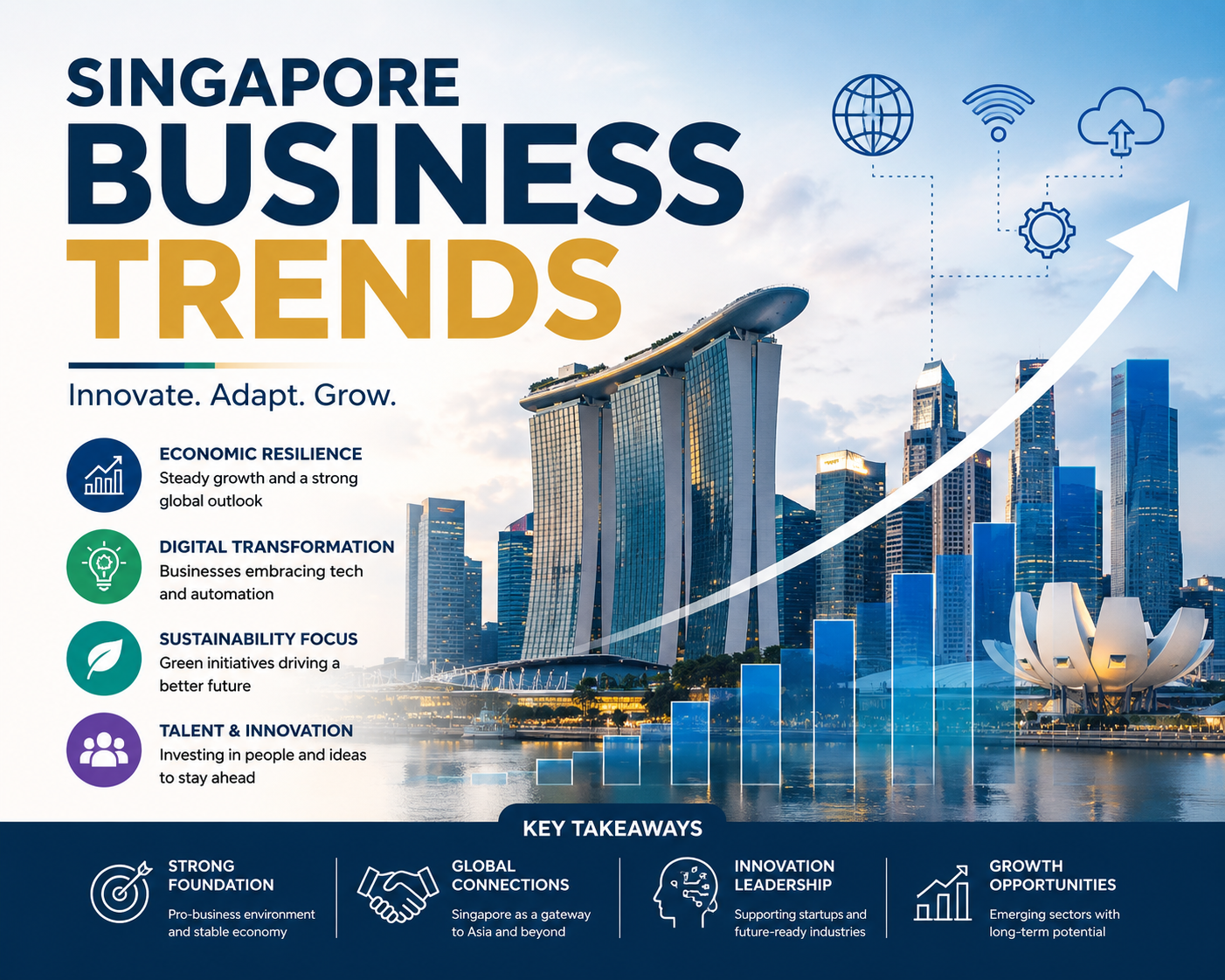
The latest Singapore Business Trends show that innovation, digital transformation, sustainability, and customer-focused strategies are shaping the country’s future economy.
Businesses of every size have opportunities to grow by embracing technology, improving customer experiences, developing employee skills, and exploring new regional markets.
While trends will continue to evolve, one thing remains constant: businesses that adapt quickly are often the ones that achieve long-term success. Whether you’re launching a startup, managing an SME, or leading a large organization, understanding these trends can help you make smarter decisions and stay competitive in Singapore’s dynamic business environment.