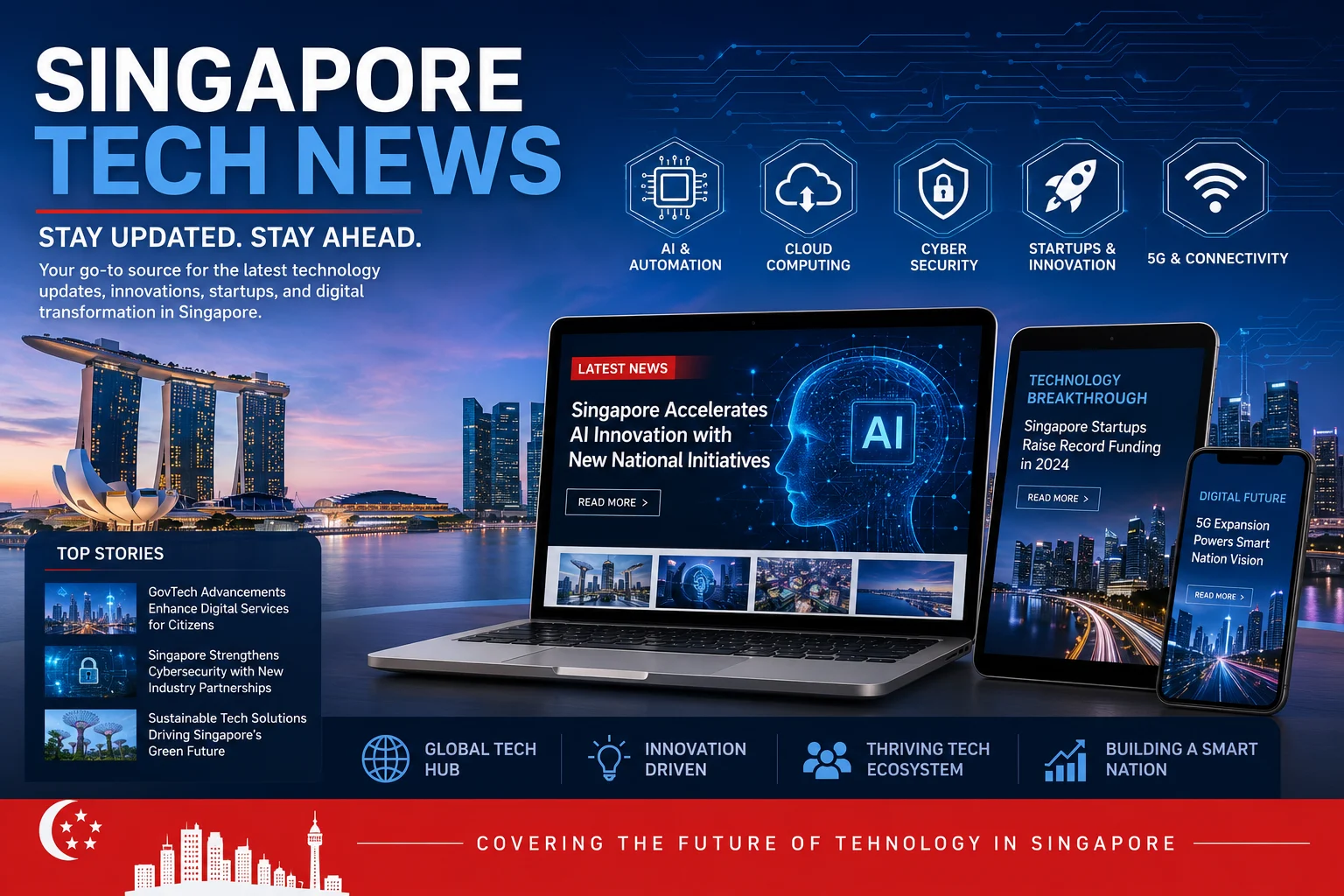
Singapore Tech News: 10 Latest Technology Trends Shaping the Future of Singapore
Technology moves fast in Singapore. One day it’s about artificial intelligence breakthroughs, the next it’s about a new startup raising millions, a government digital service getting smarter, or businesses adopting tools that completely change how they work.
That’s why keeping up with Singapore Tech News has become more important than ever. Technology is no longer limited to software companies or research labs. It affects almost every part of daily life — from how people pay for groceries to how companies manage data, how students learn, and how cities prepare for the future.
Singapore has built a reputation as one of Asia’s leading technology hubs. With strong infrastructure, a digitally connected population, and ambitious innovation plans, the country continues to attract global tech companies, entrepreneurs, and researchers.
Here are some of the biggest technology trends and developments currently shaping Singapore’s digital landscape.
1. Artificial Intelligence Is Leading Singapore’s Digital Revolution
Artificial intelligence (AI) has become one of the biggest topics in Singapore Tech News. Businesses, government agencies, and educational institutions are exploring how AI can improve productivity and create new opportunities.
Singapore has been investing heavily in AI research and adoption. Companies are using AI-powered tools for customer service, data analysis, cybersecurity, healthcare solutions, and automation.
For example, businesses are using AI chat systems to handle routine customer questions, allowing employees to focus on more complex tasks. Financial institutions are applying AI models to detect fraud and improve risk management.
But AI growth isn’t only about large corporations. Small and medium-sized businesses in Singapore are also experimenting with AI tools to reduce costs and compete in a changing market.
There are still challenges, of course. Questions around data privacy, ethical AI use, and workforce changes remain important discussions. The next phase of Singapore’s AI journey will likely focus on balancing innovation with responsible adoption.
2. Singapore’s Startup Scene Continues to Grow
Singapore has become a major startup centre in Southeast Asia. From fintech and healthcare technology to climate solutions and artificial intelligence, startups are creating new products designed for regional and global markets.
One reason startups choose Singapore is its supportive ecosystem. Entrepreneurs have access to funding networks, research institutions, government support programmes, and international connections.
Fintech remains one of the strongest areas. Singapore-based companies are developing digital payment solutions, blockchain applications, online banking services, and financial tools for businesses and consumers.
Health technology is another growing sector. Startups are working on remote healthcare platforms, medical devices, and digital health solutions that make healthcare more accessible.
And the competition is intense. New companies need to move quickly, understand customer needs, and create something genuinely useful. A great idea alone is not enough anymore.
3. Smart Nation Projects Are Transforming Everyday Life
When discussing Singapore Tech News, the Smart Nation initiative is impossible to ignore.
Singapore has been developing technology-driven solutions to improve public services and urban living. These efforts include smart transportation systems, digital government services, sensors across the city, and data-driven planning.
Residents already experience many digital services in daily life. From online government transactions to cashless payments, technology has become deeply integrated into everyday routines.
Smart transportation is another major focus. Singapore uses technology to manage traffic flow, improve public transport efficiency, and support future mobility solutions such as autonomous vehicles.
The idea is simple: use technology to make city life smoother, safer, and more sustainable.
However, smart cities also need to consider privacy and cybersecurity. A highly connected city requires strong protection against digital threats.
4. Cybersecurity Becomes a Top Priority
As Singapore becomes more digitally connected, cybersecurity has become a major concern.
Cyber attacks are becoming more advanced, targeting businesses, government systems, and individuals. This has pushed organisations to invest more in security technologies and stronger digital protection measures.
Companies are adopting solutions such as advanced threat detection, identity management systems, encryption technologies, and security monitoring platforms.
Cybersecurity talent is also becoming highly valuable. Singapore needs skilled professionals who can protect networks, analyse threats, and respond quickly when incidents happen.
For everyday users, cybersecurity awareness matters too. Simple actions like using strong passwords, enabling two-factor authentication, and being careful with suspicious messages can prevent many common attacks.
The digital world offers convenience, but it also requires responsibility.
5. Green Technology and Sustainable Innovation Are Rising
Singapore’s technology growth is not only about speed and efficiency. Sustainability is becoming a major focus as well.
Green technology is gaining attention among startups, businesses, and researchers. Companies are developing solutions related to renewable energy, carbon management, sustainable buildings, and resource efficiency.
Singapore’s limited land area makes innovation especially important. Technologies that improve energy usage, reduce waste, and support environmental goals are becoming increasingly valuable.
Data centres are one example. As demand for digital services grows, Singapore is exploring ways to make these facilities more energy efficient.
Climate technology is expected to become an even bigger part of Singapore Tech News in the coming years.
6. Fintech Continues to Change How Singapore Handles Money
Singapore has one of the most advanced financial technology ecosystems in Asia.
Digital payments, online banking, and financial platforms have changed how consumers and businesses manage money. Many people now expect fast, secure, and convenient digital financial services.
Fintech companies are developing solutions for payments, investment platforms, insurance technology, and business finance tools.
Blockchain technology is also being explored in areas such as digital assets and secure transactions.
The growth of fintech has encouraged traditional financial institutions to modernise. Banks are investing in digital platforms and partnerships with technology companies to meet changing customer expectations.
7. Robotics and Automation Are Expanding Across Industries
Singapore has long focused on automation to improve productivity. Robotics is now playing a larger role across industries including manufacturing, logistics, healthcare, and hospitality.
Factories are using robotic systems to improve precision and efficiency. Warehouses are adopting automation technology to manage inventory and delivery processes.
Healthcare is another area where robotics can make a difference. Robots can assist with repetitive tasks, support elderly care, and improve hospital operations.
But automation also creates conversations about jobs. Workers need opportunities to develop new skills and adapt to technology-driven workplaces.
The future is likely not humans versus machines — it’s humans working alongside smarter machines.
8. Education Technology Is Changing Learning
Technology has also transformed education in Singapore.
Schools and learning providers are using digital platforms, interactive tools, and personalised learning systems to improve education experiences.
Students now have access to online resources, digital classrooms, and learning applications that support different learning styles.
Education technology companies are also creating solutions for skills training and lifelong learning. As industries change quickly, continuous learning has become essential.
Technology does not replace teachers. Instead, it provides new ways for educators to support students.
9. 5G and Advanced Connectivity Support Innovation
Fast and reliable connectivity is the foundation of many new technologies.
Singapore’s 5G development supports industries that depend on high-speed communication, including autonomous vehicles, smart factories, healthcare technology, and immersive digital experiences.
Better connectivity allows businesses to develop new services and improve operations.
For consumers, faster networks mean smoother digital experiences, from entertainment streaming to online communication.
As connected devices become more common, strong digital infrastructure will remain one of Singapore’s biggest advantages.
10. What’s Next for Singapore Technology?
The future of Singapore technology looks highly promising. Artificial intelligence, automation, cybersecurity, fintech, and sustainability will likely continue dominating Singapore Tech News in the years ahead.
But technology success is not only measured by new inventions. It also depends on how these innovations improve people’s lives.
Singapore’s approach has always focused on practical solutions — using technology to solve real problems.
There will be challenges. Talent shortages, cybersecurity risks, and ethical concerns will require careful planning. Yet Singapore’s strong digital foundation gives it a solid position to continue leading in the region.
Final Thoughts
Singapore Tech News reflects a country constantly adapting to a changing digital world. From AI and startups to smart city solutions and green technology, innovation is becoming part of everyday life.
The next few years will bring even more changes. Some technologies will succeed, others will fade away. That’s normal.