Singapore Rental Updates: 10 Key Changes Tenants and Landlords Should Know in 2026
The rental scene in Singapore has changed quite a bit over the past few years. After a period of sharp increases, the market is slowly moving into a more balanced phase. Tenants are becoming more careful with their budgets, while landlords are paying closer attention to pricing, competition, and changing expectations.
Keeping up with Singapore Rental Updates is no longer just useful for property investors. It matters for anyone searching for a new home, renewing a lease, managing a rental unit, or simply trying to understand where the housing market is heading.
From rental price movements to government measures and shifting tenant preferences, several factors are shaping Singapore’s rental landscape in 2026. Here are the important updates worth knowing.
1. Rental Growth Has Started to Slow Down
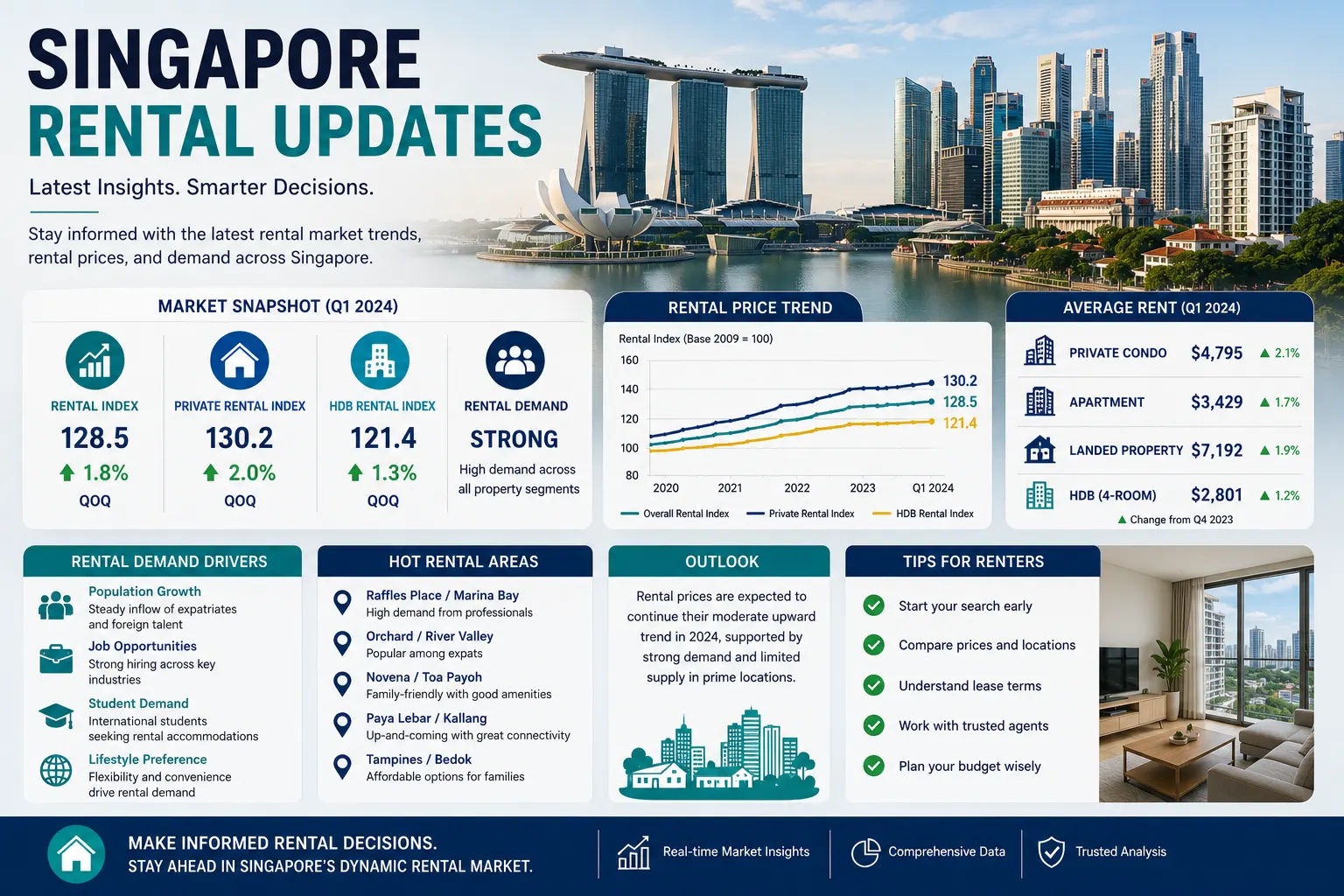
One of the biggest Singapore Rental Updates is the moderation of rental price growth.
During the post-pandemic period, Singapore experienced a strong surge in rental demand. Many factors contributed to this — more people returning to Singapore, delays in housing completion, an increase in expatriate demand, and limited available rental units.
However, the market has gradually cooled.
Rental prices are still higher compared with pre-pandemic levels, but the rapid increases seen earlier have slowed. Tenants now have more choices, especially with more completed residential projects entering the market.
For landlords, this means the old strategy of simply increasing rent every year may not work anymore. Pricing has become more competitive.
A realistic asking price, good property condition, and responsive communication are becoming much more important.
2. More New Homes Are Easing Rental Pressure
Another important change is the increasing supply of residential units.
Singapore has been actively expanding housing availability through new Build-To-Order (BTO) projects, private residential developments, and other housing initiatives. As more homes become available, some rental demand pressure has eased.
This is good news for tenants because they may have more options when looking for a place.
Previously, many renters had to quickly accept available units because competition was extremely high. Today, tenants can compare locations, amenities, rental rates, and property conditions more carefully.
But landlords also need to adjust.
A vacant unit means lost income, so keeping properties attractive is becoming a bigger priority. Simple improvements like proper maintenance, updated furniture, and a clean presentation can make a difference.
3. Tenants Are Becoming More Budget-Conscious
One noticeable trend in recent Singapore Rental Updates is the changing behaviour of tenants.
With higher living costs, many renters are reviewing their housing expenses more carefully. Some are choosing smaller units, sharing apartments, or moving further away from central areas to save money.
Location remains important, but affordability is now a major deciding factor.
For example, tenants may consider areas with:
- Good MRT connectivity
- Nearby schools and amenities
- Reasonable travel times
- Lower rental prices compared with city-centre locations
The idea of paying premium prices just for a central address is becoming less attractive for some renters.
Landlords who understand these preferences can position their properties better and attract suitable tenants faster.
4. Popular Rental Areas Continue to Evolve
Singapore’s rental demand has traditionally been strong in central districts, but tenant preferences are changing.
While locations near the Central Business District (CBD), Orchard, and popular expatriate neighbourhoods remain attractive, other areas are gaining attention.
Neighbourhoods with convenient transport links and lifestyle amenities are becoming increasingly popular.
Areas near:
- Major MRT lines
- Business hubs
- Universities
- Shopping centres
- Family-friendly facilities
are seeing continued interest.
This shift shows that Singapore’s rental market is becoming more diverse. Tenants are looking beyond traditional hotspots and considering overall lifestyle value.
A slightly longer commute may be acceptable if the rental savings are significant.
5. Rental Agreements Need More Attention
With changing market conditions, both landlords and tenants are paying closer attention to rental agreements.
A tenancy agreement is more than just a document with rental price and lease duration. It covers important details such as:
- Maintenance responsibilities
- Repair costs
- Security deposits
- Early termination conditions
- Renewal terms
- Utility arrangements
Many rental disputes happen because expectations are unclear from the beginning.
A good agreement protects both sides.
Tenants should read every clause carefully before signing. Landlords should also ensure terms are clear and reasonable to avoid future misunderstandings.
Small details matter — especially when dealing with repairs, damages, and lease extensions.
6. Demand for Flexible Rental Options Is Increasing
Another interesting trend in Singapore Rental Updates is the growing interest in flexible housing solutions.
Some tenants, especially professionals and newcomers to Singapore, prefer shorter commitments or fully furnished homes.
This includes:
- Serviced apartments
- Co-living spaces
- Flexible rental arrangements
These options provide convenience for people who may not want a traditional two-year lease.
However, standard long-term rentals remain the preferred choice for many families and stable residents.
The market is becoming more segmented. Different groups are looking for different solutions.
Landlords who understand their target tenants can make better decisions about furnishing, pricing, and lease structures.
7. Landlords Are Focusing More on Property Maintenance
Gone are the days when almost any rental unit could attract tenants quickly.
Today’s renters compare multiple listings before making a decision. Photos, cleanliness, condition, and overall presentation matter.
A well-maintained property can stand out immediately.
Common improvements landlords are considering include:
- Fresh painting
- Better lighting
- Functional appliances
- Updated furniture
- Regular repairs
It does not always require a major renovation.
Sometimes small upgrades create a much better first impression.
And in a more competitive rental environment, first impressions can determine how quickly a unit gets rented.
8. Foreign Tenant Demand Remains an Important Factor
Singapore has always been an international business hub, and foreign professionals continue to influence the rental market.
Companies relocating employees, international schools, and Singapore’s position as a regional business centre all contribute to rental demand.
However, tenant expectations have changed.
Many expatriates are now more cost-conscious and may compare rental prices more carefully than before. Some companies have also adjusted housing budgets.
This means landlords targeting foreign tenants need to offer value, not just location.
A convenient home with practical features can often perform better than an expensive unit without added benefits.
9. Technology Is Changing How People Rent Homes
Digital tools have transformed the rental process.
Tenants now search, compare, and communicate online before viewing properties. Virtual tours, digital listings, and online property platforms have made the process faster.
For landlords, online presentation has become essential.
High-quality photos, accurate descriptions, and quick responses can help attract serious enquiries.
Technology is also helping people make better decisions. Tenants can compare neighbourhoods, estimate travel times, and understand market conditions more easily.
The rental journey has become more transparent than before.
10. Staying Updated Helps You Make Better Rental Decisions
The Singapore rental market will continue changing based on supply, demand, economic conditions, and lifestyle trends.
Whether you are a tenant looking for your next home or a landlord managing an investment property, staying updated is important.
The biggest lesson from recent Singapore Rental Updates is that flexibility matters.
Tenants need to understand market conditions and negotiate wisely. Landlords need to adapt to changing expectations and provide good value.
The rental market is no longer only about finding the highest possible price or the cheapest possible option. It is about finding a fair balance between location, comfort, affordability, and long-term value.
Final Thoughts on Singapore Rental Updates
Singapore’s rental landscape in 2026 is entering a more stable and competitive stage. Rapid rental increases have slowed, tenant choices have expanded, and landlords are becoming more strategic.
For renters, this creates opportunities to compare options and make smarter choices. For property owners, it highlights the importance of realistic pricing, good maintenance, and understanding tenant needs.
Keeping track of Singapore Rental Updates allows everyone involved to stay prepared as the market continues to evolve.
The rental environment may change again in the months ahead — and those who stay informed will always have an advantage.