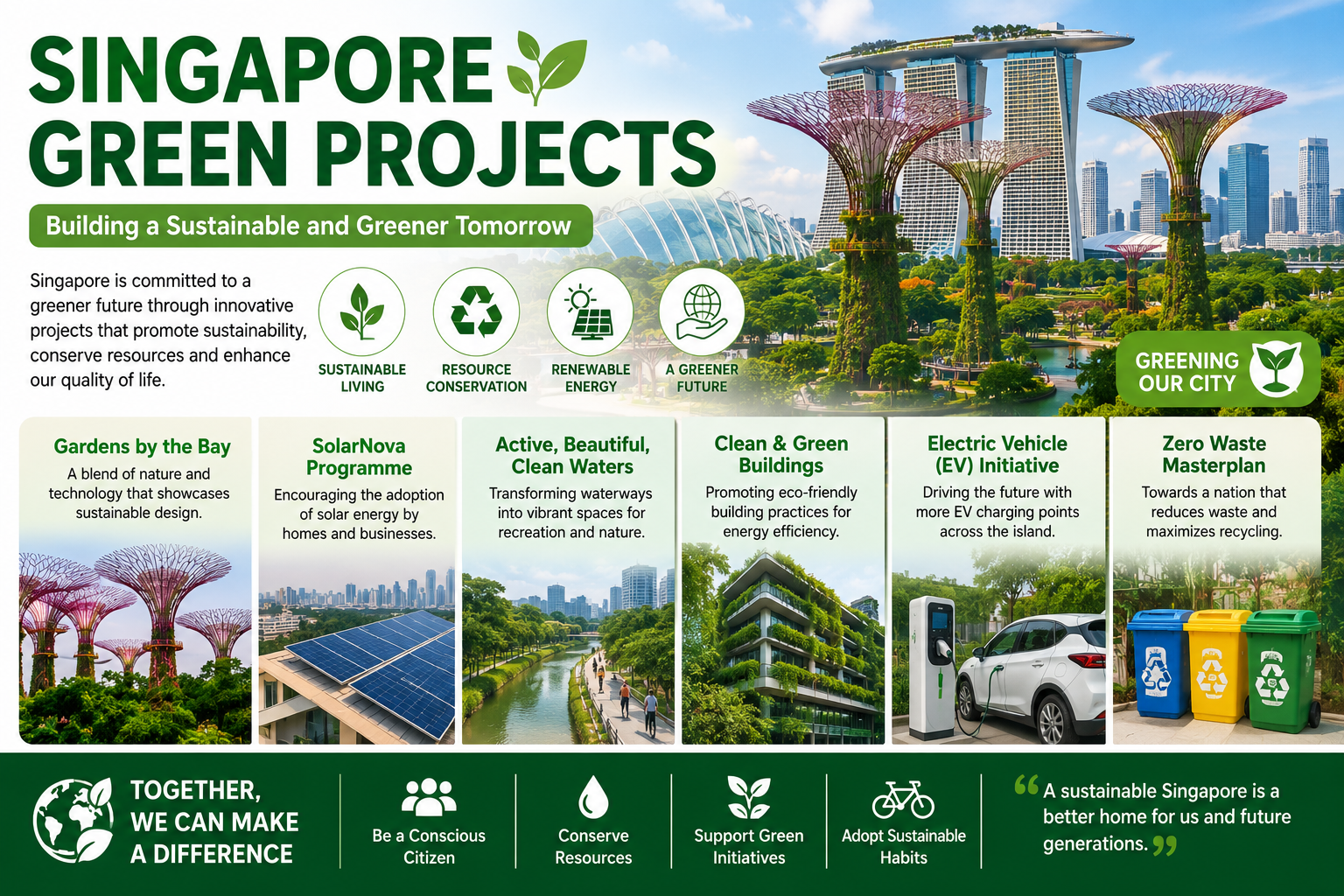
Singapore Green Projects: 10 Inspiring Initiatives Building a Greener Future
Singapore is often recognized for its sparkling skyline and modern infrastructure. But look a little closer, and you’ll notice something even more impressive. The city-state has quietly become one of the world’s leading examples of sustainable urban development.
From towering vertical gardens to solar-powered neighborhoods, Singapore Green Projects are changing the way people think about city living. These initiatives aren’t just about planting more trees. They’re about creating healthier communities, reducing carbon emissions, protecting biodiversity, and making sure future generations inherit a cleaner, more resilient country.
What’s interesting is that many of these projects blend nature with technology so naturally that they almost disappear into everyday life. That’s probably the biggest compliment a sustainability project can receive.
Let’s explore some of Singapore’s most remarkable green initiatives.
1. Gardens by the Bay Continues to Set Global Standards
It’s impossible to talk about Singapore Green Projects without mentioning Gardens by the Bay.
The massive nature park transformed reclaimed land into one of the world’s most famous environmental attractions. But there’s far more happening behind the scenes than beautiful flowers and iconic Supertrees.
The conservatories collect rainwater, generate solar energy, and use advanced cooling systems that consume significantly less energy than traditional greenhouses.
Visitors enjoy lush landscapes.
Scientists study plant conservation.
Tourists leave inspired.
It’s sustainability wrapped inside an unforgettable experience.
2. The Singapore Green Plan 2030
The Singapore Green Plan 2030 isn’t a single project—it’s an ambitious national roadmap.
The plan focuses on:
- Cleaner energy
- Sustainable transportation
- Greener buildings
- Waste reduction
- Nature conservation
- Climate resilience
Its long-term goal is simple yet challenging: create a low-carbon nation without slowing economic growth.
That balance isn’t easy.
But Singapore has consistently shown that economic development and environmental responsibility can work together.
3. SolarNova Is Covering Rooftops with Solar Panels
SolarNova has become one of Singapore’s largest renewable energy initiatives.
Instead of relying on large solar farms—which are difficult in a land-scarce country—the government installs solar panels across:
- Public housing
- Schools
- Government buildings
- Industrial facilities
Thousands of rooftops now generate clean electricity every day.
It’s a practical solution tailored specifically for Singapore’s unique urban landscape.
4. Park Connector Network Makes Nature More Accessible
Imagine cycling across an entire city while staying surrounded by greenery.
That’s exactly what Singapore’s Park Connector Network offers.
Hundreds of kilometers of connected walking and cycling paths link parks, reservoirs, neighborhoods, and natural habitats.
People use these green corridors for:
- Morning walks
- Cycling
- Jogging
- Wildlife observation
- Daily commuting
And honestly…they make city life feel much less crowded
5. Green Buildings Are Becoming the New Normal
Singapore has invested heavily in environmentally friendly architecture.
Many commercial buildings now feature:
- Energy-efficient lighting
- Smart air-conditioning
- Rainwater harvesting
- Green roofs
- Natural ventilation
- Sustainable construction materials
The Green Mark Certification encourages developers to design buildings that consume less water and electricity while improving indoor comfort.
Today, green construction isn’t just a trend.
It’s becoming the standard.
6. Tengah—Singapore’s First Smart Forest Town
Tengah represents one of the country’s boldest urban planning experiments.
Unlike traditional residential developments, Tengah integrates forests, wildlife corridors, and smart technologies from the beginning.
Some planned features include:
- Car-free town center
- Automated waste collection
- Smart energy monitoring
- Extensive cycling routes
- Community gardens
- Large green spaces
The idea is simple.
Build a city that works with nature instead of against it.
7. Urban Farming Is Growing Higher
Limited land hasn’t stopped Singapore from producing fresh food.
Instead, innovation has moved farming upward.
Vertical farms now grow vegetables inside climate-controlled buildings using:
- LED lighting
- Hydroponics
- Automation
- Water recycling systems
These urban farms require far less land while producing crops throughout the year.
It’s a clever response to food security challenges.
And demand continues to grow.
8. ABC Waters Programme Improves Water Sustainability
Singapore has transformed reservoirs and canals into vibrant community spaces through the Active, Beautiful, Clean Waters Programme.
Instead of treating waterways as concrete drainage systems, engineers redesigned them with natural landscapes.
The benefits are impressive:
- Cleaner waterways
- Better flood management
- More wildlife habitats
- Recreational parks
- Improved water quality
Residents gain beautiful public spaces while the environment benefits too.
Everyone wins.
9. Massive Tree Planting Across the Island
Trees play a surprisingly important role in urban sustainability.
They lower temperatures.
Improve air quality.
Reduce flooding.
Support biodiversity.
Singapore continues planting hundreds of thousands of new trees across parks, roadsides, schools, and residential neighborhoods.
These aren’t random landscaping efforts.
They’re carefully planned climate adaptation strategies.
Every new tree contributes to a cooler and healthier city.
10. Electric Vehicle Infrastructure Is Expanding Rapidly
Transportation remains one of the largest contributors to carbon emissions worldwide.
Singapore is responding by investing heavily in electric mobility.
Charging stations are appearing across:
- Shopping malls
- Housing estates
- Office buildings
- Public parking areas
Government incentives also encourage residents to switch from traditional vehicles to electric alternatives.
The transition won’t happen overnight.
But the momentum is clearly building.
Why Singapore Green Projects Matter
Many countries talk about sustainability.
Singapore actively builds it.
That’s an important difference.
Each green project contributes toward larger national goals:
- Lower carbon emissions
- Better public health
- Improved biodiversity
- Stronger climate resilience
- Higher quality of life
- Long-term economic sustainability
Perhaps the biggest lesson isn’t the technology itself.
It’s the long-term planning.
Singapore rarely treats sustainability as a one-time campaign. Instead, environmental thinking is woven into transportation, housing, education, construction, and even tourism.
That integrated approach makes these initiatives especially effective.
Challenges Along the Way
Of course, no sustainability journey is perfect.
Singapore still faces several obstacles.
Limited land means renewable energy options remain constrained.
Growing energy demand creates additional pressure.
Climate change continues bringing hotter temperatures and heavier rainfall.
Balancing economic growth with environmental protection isn’t always straightforward either.
But these challenges have often encouraged more innovation rather than slowing progress.
What Other Cities Can Learn
Cities around the world increasingly study Singapore Green Projects for inspiration.
Several key lessons stand out:
- Plan decades ahead.
- Integrate nature into urban development.
- Invest in green technology early.
- Encourage public participation.
- Support sustainable transportation.
- Protect biodiversity while expanding cities.
Not every solution can be copied exactly.
Still, the overall strategy offers valuable guidance for rapidly growing urban areas everywhere.
Final Thoughts
Singapore Green Projects show that sustainability isn’t only about reducing environmental impact. It’s about creating cities where people genuinely enjoy living.
From towering gardens and smart towns to solar rooftops and connected parks, these initiatives demonstrate what’s possible when innovation meets long-term planning.
And perhaps that’s the biggest takeaway.
A greener future doesn’t happen by accident. It happens one thoughtful project at a time.
As Singapore continues investing in renewable energy, green infrastructure, cleaner transport, and biodiversity conservation, it remains one of the world’s strongest examples of sustainable urban development. For anyone interested in the future of cities, Singapore Green Projects provide inspiration—and practical ideas—that reach far beyond the island itself.