Singapore Digital Economy: Growth, AI & Future Trends
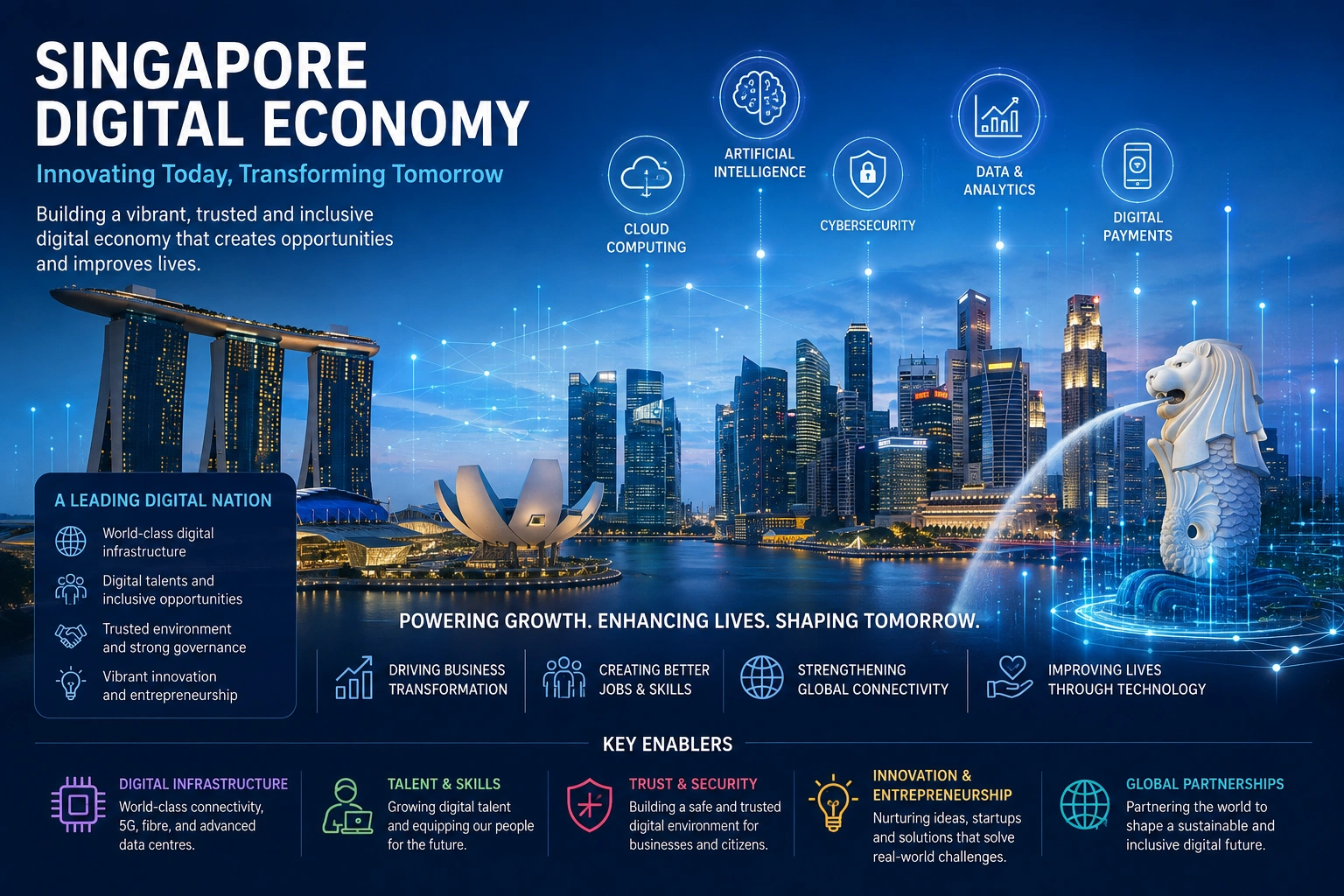
Singapore’s digital economy has become a major part of the country’s economic growth, with technology now playing a role in finance, manufacturing, retail, transport, healthcare, and professional services. It includes businesses and activities that depend on digital platforms, software, data, cloud services, artificial intelligence, and online transactions.
The Singapore Digital Economy reached S$128.1 billion in 2024, accounting for 18.6% of Singapore’s GDP, according to the Infocomm Media Development Authority (IMDA). The sector has also created strong demand for technology skills, while businesses are adopting tools such as AI, cloud computing, data analytics, and cybersecurity solutions.
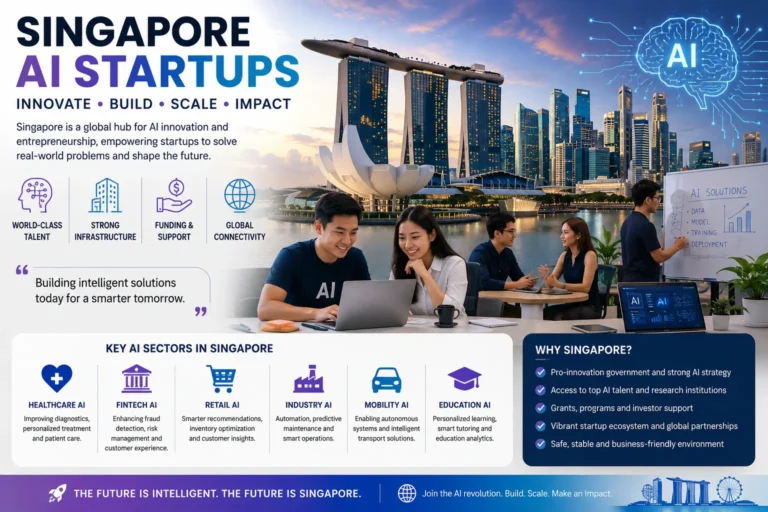
Artificial intelligence is becoming one of the biggest areas of interest. Singapore is supporting businesses and workers as AI adoption grows, while continued investment in digital infrastructure is helping the country maintain its position as a leading technology hub in Asia.

What Is Singapore Digital Economy?
The Singapore Digital Economy refers to economic activities that use digital technology, data, software, online platforms, and connected systems. It includes far more than technology companies. Banks, retailers, manufacturers, transport providers, healthcare organisations, and government agencies all use digital tools to deliver services and manage their operations.
How Does a Digital Economy Work?
A digital economy connects businesses, consumers, technology, and data through online systems. Customers can buy products through e-commerce platforms, make payments through mobile apps, and access services without visiting a physical location. Businesses can use cloud platforms, data analytics, artificial intelligence, and automated software to handle everyday tasks.
Digital Economy vs Traditional Economy
A traditional economy often depends on physical stores, paperwork, cash payments, and manual processes. A digital economy moves many of these activities online. For example, a customer no longer needs to visit a bank for every transaction because mobile banking and digital payment services can handle many tasks remotely.
Role of Digital Businesses in Singapore
Digital businesses are an important part of Singapore’s economy. Technology companies provide software, cloud services, cybersecurity, AI solutions, and digital platforms. At the same time, traditional companies are also becoming digital businesses by adding online sales, digital payments, automated systems, and data-driven services.
Singapore’s SMEs are also adopting digital tools to manage accounting, marketing, customer communication, inventory, and online sales. This allows smaller companies to compete in markets that once required much larger teams and physical operations.
Singapore Digital Economy Growth and Statistics
How Large Is Singapore’s Digital Economy?
Singapore’s digital economy has grown strongly in recent years and now represents a sizeable part of the country’s overall economy. In 2024, the Singapore Digital Economy reached S$128.1 billion, increasing by S$12 billion from the previous year. It accounted for 18.6% of Singapore’s GDP, compared with 18.0% in 2023 and 14.9% in 2019.
This growth shows that digital activity is no longer limited to technology companies. More than two-thirds of Singapore’s digital economy came from non-Information and Communications sectors, with finance and insurance, wholesale trade, and manufacturing among the major contributors.
Tech Workforce Continues to Grow
The expansion of digital businesses is also creating demand for technology professionals. Singapore’s tech workforce increased from 208,300 in 2023 to 214,000 in 2024, with AI and data, cybersecurity, cloud, and other technology skills becoming increasingly relevant across different industries.
SMEs Are Becoming More Digital
Small and medium-sized enterprises are also playing a major role. In 2024, 95.1% of Singapore SMEs had adopted at least one of six measured digital areas, including cybersecurity, cloud computing, e-payments, e-commerce, data analytics, and AI. SME AI adoption also rose sharply, reaching 14.5% in 2024, compared with 4.2% in 2023.
| Metric | 2024 Figure |
| Singapore Digital Economy | S$128.1 billion |
| Share of GDP | 18.6% |
| Digital Economy share in 2019 | 14.9% |
| Tech workforce | 214,000 |
| SMEs adopting at least one digital area | 95.1% |
| SME AI adoption | 14.5% |
| SME average digital areas adopted | 2.3 out of 6 |
Key Sectors Driving Singapore Digital Economy
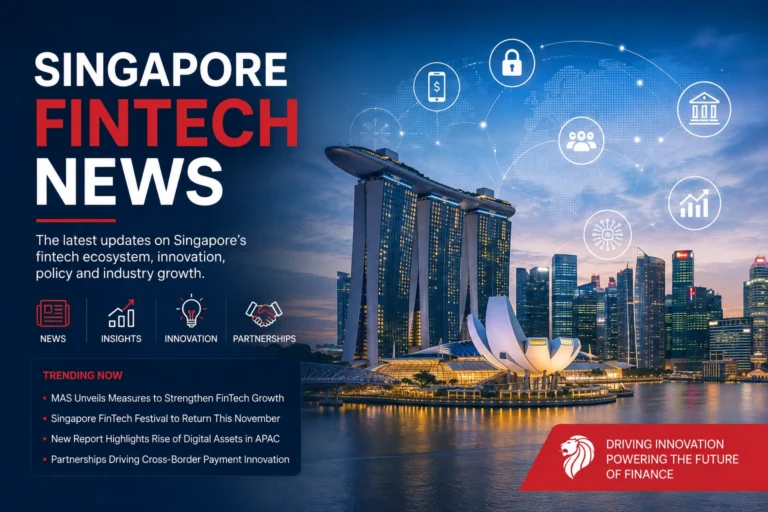
Singapore’s digital economy is supported by several major industries. Each sector uses technology in different ways to improve services, productivity, and business operations.
Financial Services
- Fintech: Digital platforms for banking, payments, lending, and investment.
- Digital Banking: Mobile apps allow customers to manage accounts and services online.
- E-Payments: Digital payment systems support faster business and consumer transactions.
Manufacturing
- Automation: Robots and automated systems handle repetitive production tasks.
- Smart Factories: Connected machines help monitor production and improve efficiency.
- Data Systems: Real-time data helps manufacturers track equipment and production performance.
Wholesale and Retail
- E-Commerce: Businesses can sell products through websites and online marketplaces.
- Digital Payments: Customers can pay through cards, mobile wallets, and other digital methods.
- Online Platforms: Digital platforms connect retailers, suppliers, and customers.
Information and Communications
- Software: Business applications support daily operations and digital services.
- Cloud Computing: Companies use cloud platforms for storage, software, and computing.
- AI: Businesses use AI for automation, analysis, and customer services.
- Cybersecurity: Security tools protect company networks, systems, and digital data.
How AI Is Changing Singapore Digital Economy
Artificial intelligence is becoming an important part of the Singapore Digital Economy, with businesses using AI to improve productivity, customer service, data analysis, and daily operations. AI adoption is no longer limited to large technology companies. Banks, retailers, manufacturers, healthcare providers, and SMEs are also testing or using AI tools.
AI Adoption in Singapore
Businesses are using AI for tasks such as forecasting demand, analysing customer data, detecting fraud, automating repetitive work, and improving internal processes. SMEs are also starting to adopt AI as easier-to-use tools become available.
Generative AI
Generative AI is creating new opportunities for businesses. Tools that generate text, images, code, summaries, and other content can help employees complete routine tasks faster. Companies are also exploring generative AI for customer support, marketing, software development, and research.
AI and Business Productivity
AI can reduce the time spent on repetitive tasks and help employees work with large amounts of information. For example, AI systems can summarise documents, analyse data, assist with customer enquiries, and support business decisions. This allows workers to spend more time on tasks that require human judgement and creativity.
AI Skills and Jobs
The growth of AI is increasing demand for skills in data science, machine learning, software development, cloud computing, and cybersecurity. At the same time, workers in non-technical roles are also being encouraged to develop basic AI skills so they can use these tools effectively.
Government AI Programmes
Singapore is supporting AI adoption through national programmes, funding, training, and business support. The National AI Impact Programme, announced in 2026, aims to support 10,000 enterprises over three years as they adopt AI and develop stronger AI capabilities. These efforts are designed to help businesses and workers benefit from the next stage of the country’s digital economy.
Digital Transformation of Singapore Businesses
Digital transformation is changing how Singapore businesses manage operations, communicate with customers, and deliver products and services. Companies are adopting digital tools not only to move existing work online but also to improve how different parts of the business work together.
Cloud Computing
- Businesses use cloud platforms for data storage, software, and computing resources.
- Teams can access systems remotely and scale services as business needs change.
Data Analytics
- Companies analyse customer, sales, and operational data to spot trends.
- Data can support better planning, forecasting, and business decisions.
E-Commerce
- Retailers and other businesses use online stores and marketplaces to reach customers.
- Digital sales channels allow businesses to operate beyond their physical locations.
Digital Payments
- Businesses accept cards, mobile wallets, QR payments, and online transfers.
- Faster digital transactions make payments more convenient for customers and companies.
Cybersecurity
- Businesses need security tools to protect customer information, networks, and digital systems.
- Measures such as access controls, monitoring, backups, and employee training help reduce cyber risks.

Automation
- Software and automated systems can handle repetitive tasks such as invoicing, scheduling, inventory updates, and customer queries.
- Automation can save employee time and allow teams to focus on higher-value work.
Role of SMEs in Singapore Digital Economy
SMEs play a major role in the Singapore Digital Economy, with businesses increasingly using cloud services, e-payments, e-commerce, cybersecurity tools, and data analytics. In 2024, 95.1% of Singapore SMEs had adopted at least one measured digital area. AI adoption also rose from 4.2% in 2023 to 14.5% in 2024, with businesses using AI for customer service, marketing, data analysis, and automation.
Digital tools can help SMEs reduce manual work, manage business operations, reach customers online, and make faster decisions. Singapore’s government also provides programmes such as SMEs Go Digital to support digital adoption through approved solutions, training, and other forms of business assistance. This support makes it easier for smaller companies to introduce new technology without building costly systems from scratch.
Digital Economy Jobs and Skills in Singapore
The growth of the Singapore Digital Economy is creating demand for technology professionals across many industries. Singapore’s tech workforce reached around 214,000 in 2024, with businesses looking for workers who can support digital systems, data, AI, and online services.
Key Digital Economy Jobs
Software development remains an important area, with companies hiring developers to build websites, mobile apps, business software, and digital platforms. AI and data roles are also growing as businesses use machine learning, data analytics, and automation to support decision-making.
Cybersecurity professionals help protect networks, customer information, and business systems from digital threats. Meanwhile, cloud computing specialists manage cloud infrastructure, applications, and data services used by modern companies.
Digital businesses also need people with digital marketing skills. SEO, social media, content, analytics, and online advertising help companies reach customers through digital channels.
Skills Needed for Future Jobs
Future roles will require both technical and practical skills. Knowledge of AI, data analytics, cloud platforms, cybersecurity, software development, and automation can open more opportunities. Communication, problem-solving, creativity, and the ability to learn new technology will also remain valuable as digital tools continue to change.
Government Initiatives Supporting Singapore Digital Economy
Singapore’s government supports digital growth through several national programmes and policies.
Smart Nation
Smart Nation promotes digital public services, smart infrastructure, digital identity, and technology-based services.
National AI Strategy
The strategy supports AI research, business adoption, talent development, and responsible AI use.
SMEs Go Digital
This programme helps SMEs adopt digital tools such as e-commerce, cloud software, cybersecurity, and digital payments.
National AI Impact Programme
Launched in 2026, the programme aims to help 10,000 enterprises adopt AI over three years.
Digital Economy Agreements
These agreements support digital trade, cross-border data flows, and cooperation in emerging technologies.
Digital Skills Programmes
Training programmes help workers build skills in AI, data, cloud computing, cybersecurity, and other digital fields.
Singapore Digital Economy Infrastructure
Singapore’s digital economy infrastructure depends on reliable 5G networks, high-speed internet, cloud services, and data centres. 5G supports faster connectivity for businesses, smart devices, automation, and digital services. Data centres provide the storage and computing power needed for cloud platforms, AI applications, and online systems. Cloud infrastructure also allows businesses to access software, computing resources, and data without maintaining all the hardware themselves.
Cybersecurity is another key part of this infrastructure. As more businesses move operations online, strong security systems are needed to protect networks, customer information, applications, and business data. Together, 5G, cloud computing, data centres, digital connectivity, and cybersecurity provide the foundation for Singapore’s growing digital economy.
| Digital Area | Main Role |
| AI | Automation and business decisions |
| Cloud Computing | Digital systems and storage |
| Data Analytics | Business insights |
| E-Payments | Digital transactions |
| E-Commerce | Online business |
| Cybersecurity | Data and system protection |
| 5G | Faster digital connectivity |
Future of Singapore Digital Economy
The future of the Singapore Digital Economy is likely to be shaped by AI, automation, cloud technology, and growing digital adoption across different industries. AI will play a larger role in business operations, from customer service and data analysis to software development and decision-making. As AI tools become easier to use, more SMEs are also expected to include them in everyday work.
AI and Automation
Automation can reduce repetitive tasks and help businesses improve productivity. Companies may use AI-powered systems for forecasting, document processing, customer support, quality checks, and other routine activities.
Growth of Digital Businesses
More businesses are expected to operate through online platforms, cloud systems, e-commerce channels, and digital payment services. New digital products and services could also create opportunities for startups and technology companies.

FAQs About Singapore Digital Economy
How big is Singapore’s digital economy?
Singapore’s digital economy reached S$128.1 billion in 2024, equal to 18.6% of the country’s GDP.
What drives Singapore’s digital economy?
AI, cloud computing, fintech, e-commerce, digital payments, data analytics, and strong digital infrastructure are major drivers.
How is AI affecting Singapore’s economy?
AI is helping businesses automate tasks, analyse data, improve productivity, and develop new digital products and services.
What are the main digital economy sectors in Singapore?
Finance, manufacturing, wholesale and retail, information and communications, and professional services are major digital economy sectors.
What is the future of Singapore digital economy?
AI adoption, automation, cloud technology, smart infrastructure, and digital skills are expected to shape its growth toward 2030.
Conclusion
The Singapore Digital Economy has become an important part of the country’s economic growth, supported by AI, cloud computing, digital payments, e-commerce, data analytics, and strong digital infrastructure. Businesses across finance, manufacturing, retail, and other sectors are adopting technology to improve their operations and serve customers.
Looking ahead, AI and automation are expected to play a bigger role, while demand for digital skills will continue to grow. With continued investment in technology, infrastructure, business support, and workforce training, Singapore is well placed to expand its digital economy toward 2030.