Singapore Housing Projects: 10 Key Developments Shaping
Singapore’s housing market has always been one of the country’s biggest success stories. From thoughtfully planned HDB towns to luxury waterfront condominiums, every new development reflects years of careful planning. And that’s exactly why Singapore housing projects continue to attract attention from homebuyers, investors, and families alike.
Whether you’re planning to buy your first home, upgrade to a larger property, or simply stay updated with Singapore’s evolving real estate landscape, understanding upcoming housing projects can make a huge difference.
Let’s explore some of the most important Singapore housing projects transforming neighborhoods across the island.
1. New Build-To-Order (BTO) Developments Continue Expanding
BTO projects remain the backbone of public housing in Singapore.
Each launch introduces thousands of flats across mature and non-mature estates, giving Singaporeans more opportunities to own affordable homes.
Popular launch locations often include:
- Tengah
- Queenstown
- Kallang-Whampoa
- Woodlands
- Yishun
- Jurong West
- Bukit Batok
Many newer projects feature:
- Smart home technologies
- Solar-powered common facilities
- Barrier-free access
- Green landscaping
- Community gardens
These developments aren’t just apartment blocks—they’re complete neighborhoods designed for modern living.
2. Tengah—Singapore’s First Smart and Sustainable Town
If there’s one project everyone seems to talk about, it’s Tengah.
Built on former forested land, Tengah is designed as Singapore’s first “Forest Town.”
Some standout features include:
- Car-lite town centre
- Underground road network
- Smart energy systems
- Extensive cycling paths
- Large green corridors
- Eco-friendly housing design
Residents will enjoy easy access to parks while remaining connected to the MRT network.
It’s a glimpse of how future towns in Singapore may look.
3. Greater Southern Waterfront Redevelopment
This is one of Singapore’s most ambitious housing projects.
Stretching along the southern coastline, the Greater Southern Waterfront will gradually transform former port land into vibrant residential districts.
Future plans include:
- Waterfront housing
- Commercial districts
- Lifestyle hubs
- Parks
- Recreation spaces
- Mixed-use developments
The location alone makes this one of Singapore’s most exciting long-term urban transformations.
4. Jurong Lake District Residential Expansion
Jurong has evolved far beyond an industrial hub.
Today, the Jurong Lake District is emerging as Singapore’s second Central Business District.
Housing developments here benefit from nearby:
- Business parks
- Shopping malls
- MRT connections
- Educational institutions
- Recreational lakes
Future residents can expect shorter commutes and greater convenience.
And honestly… that’s becoming increasingly valuable.
5. Integrated Housing Around MRT Stations
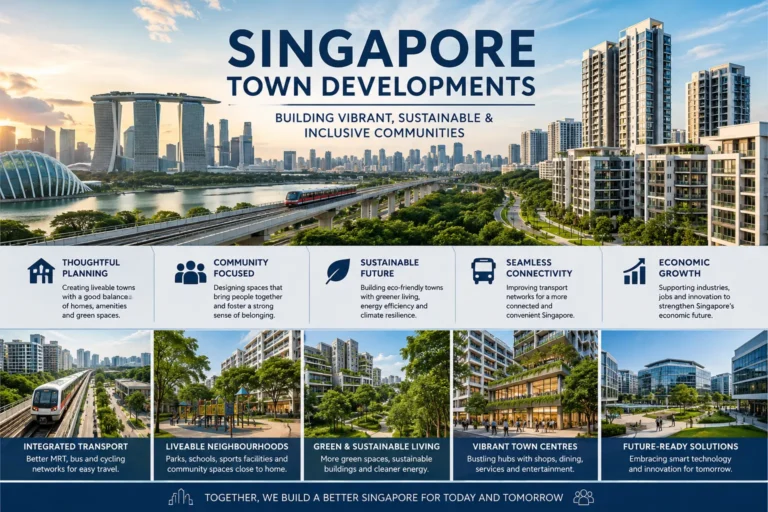
Modern Singapore housing projects increasingly focus on transit-oriented development.
Instead of building isolated residential blocks, planners integrate homes with:
- MRT stations
- Bus interchanges
- Shopping centres
- Medical facilities
- Community clubs
- Schools
The result?
Residents spend less time commuting and more time enjoying everyday life.
This planning philosophy continues to define Singapore’s urban success.
6. Eco-Friendly Housing Is Becoming the Standard
Sustainability isn’t just a trend anymore.
It’s becoming part of every major Singapore housing project.
Many new developments now feature:
- Solar panels
- Rainwater harvesting systems
- Energy-efficient lighting
- Green rooftops
- Natural ventilation
- EV charging facilities
Even landscaping plays an important role.
More trees, greener walkways, and biodiversity corridors create healthier neighborhoods while helping reduce urban heat.
Small details… but they make a noticeable difference.
7. Mixed-Use Residential Developments
Another noticeable trend is the rise of mixed-use communities.
Instead of separating residential and commercial spaces, newer projects combine everything within walking distance.
Residents may find:
- Retail shops
- Childcare centres
- Cafés
- Supermarkets
- Clinics
- Fitness facilities
This creates highly walkable communities where daily essentials are always nearby.
For busy families, that’s incredibly practical.
8. Affordable Housing Remains a National Priority
Singapore continues investing heavily in public housing.
Housing projects aren’t simply about constructing flats.
They’re about creating inclusive communities where residents from different backgrounds can thrive together.
Affordable housing initiatives often include:
- Housing grants
- Flexible payment schemes
- Family-friendly layouts
- Senior-friendly designs
- Community spaces
This balanced approach has helped Singapore maintain one of the world’s highest homeownership rates.
9. Smart Homes Are Becoming Common Features
Technology now plays a larger role than ever before.
Many newly launched housing projects include smart features such as:
- Digital door locks
- Smart lighting
- Energy monitoring
- Mobile facility booking
- Smart parcel lockers
- Intelligent security systems
These innovations improve convenience while helping households reduce energy consumption.
It’s not futuristic anymore.
It’s becoming normal.
10. Future Housing Projects Focus on Community Living
Perhaps the biggest shift isn’t about buildings at all.
It’s about people.
New developments increasingly prioritize shared community spaces where neighbors can interact naturally.
Common features include:
- Sky gardens
- Community farms
- Elderly activity areas
- Children’s playgrounds
- Fitness corners
- Multi-purpose halls
Urban planners understand that successful housing extends beyond individual apartments.
Strong communities make neighborhoods more enjoyable—and more resilient over time.
Why Singapore Housing Projects Continue to Attract Buyers
Several factors explain the continued popularity of Singapore housing projects.
Excellent Infrastructure
Every new development benefits from reliable transport, utilities, healthcare, and education.
Few countries match Singapore’s level of integrated planning.
Strong Government Planning
Long-term urban planning helps ensure housing supply remains aligned with future population growth.
This reduces uncertainty for homeowners.
High Construction Standards
Singapore maintains strict building regulations that emphasize quality, durability, and safety.
Whether public or private housing, construction standards remain consistently high.
Sustainable Urban Design
Green spaces are no longer an afterthought.
They’re incorporated into housing estates from the beginning, improving both environmental sustainability and residents’ quality of life.
Things Buyers Should Consider Before Choosing a Housing Project
Every buyer has different priorities.
Before committing to any development, consider:
- Distance to MRT stations
- Nearby schools
- Future commercial developments
- Estimated completion timeline
- Floor plan options
- Long-term investment potential
- Community facilities
- Maintenance costs
Taking time to evaluate these factors can lead to a better long-term decision.
Sometimes the cheapest option isn’t necessarily the best fit.
The Future of Singapore Housing Projects
Singapore’s housing landscape will continue evolving over the coming decades.
Future projects are expected to place even greater emphasis on:
- Climate resilience
- Smart technology integration
- Renewable energy
- Inclusive communities
- Aging-friendly infrastructure
- Walkable neighborhoods
- Flexible living spaces
As land becomes increasingly precious, innovative planning will remain essential.
And if recent developments are any indication, Singapore is well positioned to continue setting global benchmarks in urban housing.
Final Thoughts
Singapore housing projects are about much more than constructing new homes. They represent thoughtful urban planning, sustainability, technological innovation, and a long-term commitment to creating vibrant communities.
From smart towns like Tengah to major transformations such as the Greater Southern Waterfront and Jurong Lake District, these developments are reshaping how Singaporeans live, work, and connect. Whether you’re a first-time buyer, upgrading your home, or exploring investment opportunities, staying informed about upcoming housing projects can help you make more confident decisions.
The next chapter of Singapore housing is already taking shape—and it promises to be smarter, greener, and even more connected than ever before.