Singapore Industry Updates: Key Trends, Business Shifts, and Economic
Singapore has always been known for staying ahead of global economic changes. From its strong financial sector to advanced manufacturing, technology, logistics, and green initiatives, the country continues to adapt quickly as industries evolve.
Keeping track of Singapore Industry Updates is important for businesses, investors, professionals, and even students who want to understand where the economy is heading. New government initiatives, technology adoption, workforce changes, and global market conditions are shaping the next phase of Singapore’s growth.
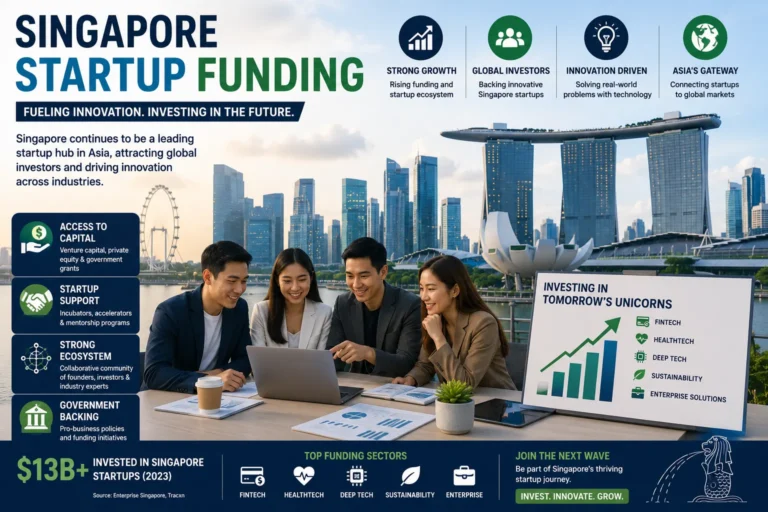
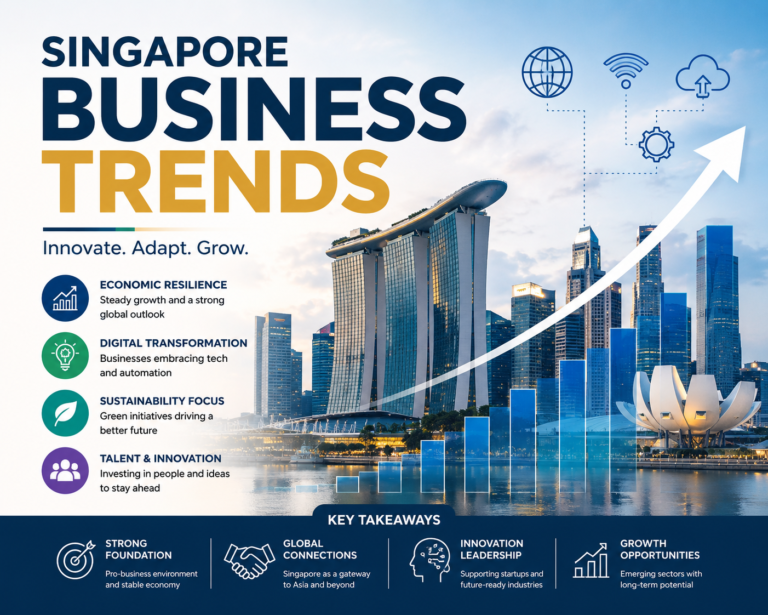
The business environment today looks quite different from a few years ago. Companies are investing more in automation, sustainability, artificial intelligence, and digital transformation. At the same time, traditional industries are finding new ways to remain competitive.
Here are some of the biggest industry developments and trends currently influencing Singapore’s economic landscape.
1. Manufacturing Sector Continues Its High-Tech Transformation
Manufacturing remains one of Singapore’s most important economic pillars. While the industry has changed significantly, it continues to play a major role in exports, employment, and innovation.
Singapore is moving away from traditional manufacturing models and focusing on advanced production methods. Companies are increasingly using robotics, artificial intelligence, data analytics, and smart factory systems to improve efficiency.
Key areas experiencing growth include:
- Semiconductor manufacturing
- Precision engineering
- Biomedical production
- Aerospace engineering
- Advanced electronics
The semiconductor industry, in particular, remains a major focus. Global demand for chips used in electric vehicles, artificial intelligence systems, and consumer electronics has created new opportunities.
But the sector also faces challenges. Global supply chain disruptions, rising operational costs, and competition from other manufacturing hubs mean companies must keep improving.
Singapore’s strategy is clear — become a location for high-value manufacturing rather than competing purely on cost.
2. Artificial Intelligence Is Reshaping Singapore Businesses
Artificial intelligence has become one of the biggest topics in Singapore’s business environment.
Companies across different industries are experimenting with AI tools to improve productivity, customer service, and decision-making. Banks are using AI for fraud detection, retailers are applying it for personalised recommendations, and manufacturers are using AI to predict equipment problems before failures happen.
The Singapore government has also been encouraging responsible AI adoption through national strategies and support programmes.
Some industries seeing strong AI adoption include:
- Finance
- Healthcare
- Education
- Logistics
- Professional services
- Retail
Small and medium-sized enterprises are also beginning to explore AI solutions. For many businesses, the question is no longer whether they should use AI, but how they can use it effectively.
Still, companies need to balance innovation with concerns around data security, employee training, and ethical technology use.
AI may change the way people work, but Singapore’s focus is on helping workers adapt rather than simply replacing jobs.
3. Green Economy and Sustainability Investments Are Growing
Sustainability has become a major priority in Singapore’s economic planning.
As climate challenges increase worldwide, industries are under pressure to reduce emissions and adopt greener practices. Singapore is positioning itself as a regional leader in sustainable business solutions.
Important areas of development include:
- Renewable energy projects
- Carbon management solutions
- Green finance
- Sustainable buildings
- Clean technology
The finance sector, for example, is playing a larger role in supporting sustainable investments. Banks and financial institutions are developing green financing options that help companies move towards cleaner operations.
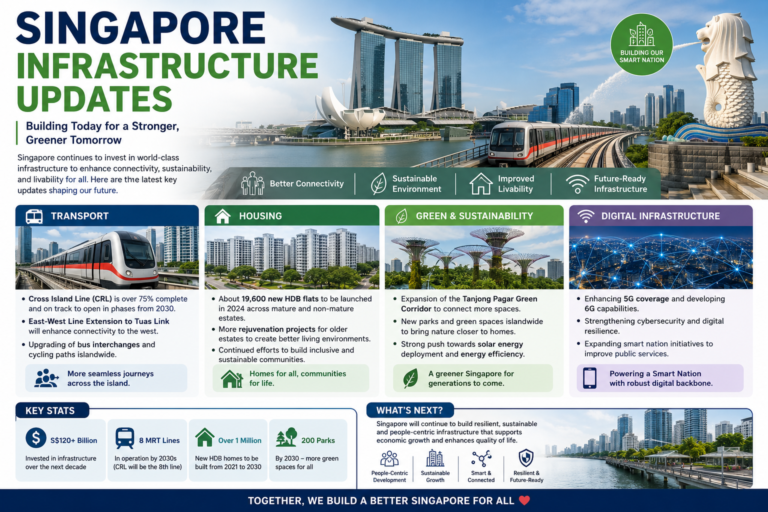
The construction industry is also changing. More buildings are being designed with energy efficiency, smart technology, and environmental standards in mind.
And this shift is not only about meeting regulations. Many companies are recognising that sustainability can improve long-term competitiveness and attract environmentally conscious customers.
4. Singapore’s Digital Economy Keeps Expanding
Singapore’s digital economy continues to grow as businesses accelerate their technology adoption.
From online services to cloud computing and cybersecurity, digital transformation has become essential for companies of all sizes.
Several industries are benefiting from digital growth:
Financial Technology (FinTech)
Singapore remains one of Asia’s leading FinTech centres. Digital banking, payment solutions, blockchain applications, and financial innovation continue to expand.
E-Commerce
Consumer habits have changed significantly. Businesses are investing in online platforms, digital marketing, and improved delivery systems to meet customer expectations.
Cybersecurity
As businesses become more connected, protecting digital systems has become increasingly important. Demand for cybersecurity professionals and solutions continues to rise.
Singapore’s strong digital infrastructure and business-friendly environment make it attractive for international technology companies looking to expand in Asia.
5. Healthcare Industry Sees Innovation and Expansion
Singapore’s healthcare sector is experiencing major developments due to an ageing population, medical innovation, and increasing demand for healthcare services.
The industry is expanding beyond traditional hospitals and clinics. Technology is becoming a bigger part of healthcare delivery.
Major trends include:
- Telemedicine services
- Digital health platforms
- Medical research
- Biotechnology development
- Personalised healthcare
Singapore has also strengthened its position as a biomedical hub. Pharmaceutical companies and research organisations continue to invest in the country because of its strong infrastructure and skilled workforce.
Healthcare is expected to remain a key growth sector, especially as demand increases for better healthcare solutions and preventive care.
6. Logistics and Maritime Industries Adapt to Global Changes
Singapore’s location has always made it a major global trading hub. Its port, shipping networks, and logistics capabilities remain essential to international commerce.
However, the industry is changing rapidly.
Companies are adopting:
- Automated warehouses
- Digital supply chain systems
- Smart logistics platforms
- Sustainable shipping solutions
The maritime sector is also exploring cleaner fuels and new technologies to reduce environmental impact.
Recent global events have shown how important supply chain resilience is. Businesses are now focusing not only on efficiency but also on flexibility and risk management.
Singapore’s ability to connect businesses across Asia continues to give it a competitive advantage.
7. Workforce Development Becomes a Major Industry Focus
As industries transform, workforce skills must evolve too.
Many companies are looking for professionals with expertise in technology, data analysis, engineering, sustainability, and digital solutions.
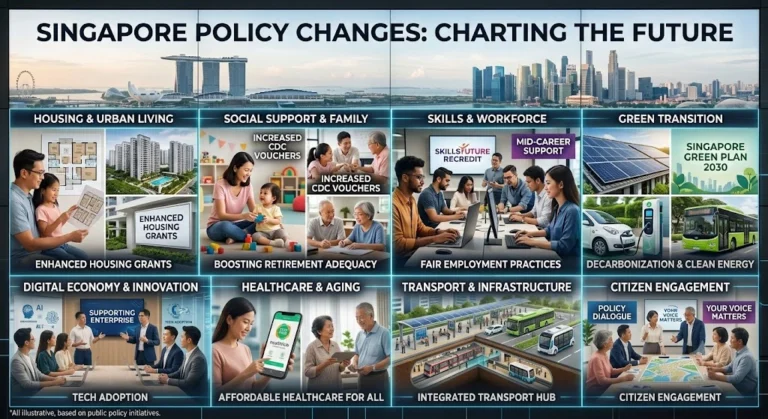
Singapore continues to invest in skills development through training programmes and industry partnerships.
The future workforce will likely require a combination of technical knowledge and human skills such as:
- Problem-solving
- Creativity
- Communication
- Adaptability
The idea of lifelong learning is becoming increasingly important. Workers across different industries need opportunities to upgrade their skills as job requirements change.
But businesses also have a role to play. Companies that invest in employee development will be better positioned for future growth.
8. Small and Medium Enterprises Continue Their Digital Journey
Small and medium enterprises form a large part of Singapore’s business community. Many SMEs are working to modernise operations and compete in an increasingly digital marketplace.
Common areas of improvement include:
- Digital payment systems
- Online marketing
- Customer management tools
- Automation solutions
- Data-driven decision-making
For smaller businesses, adopting new technology can sometimes feel challenging due to cost and resource limitations.
However, government support programmes and digital solutions designed for SMEs are making transformation more accessible.
The businesses that adapt quickly will likely have stronger opportunities in the changing economy.
Final Thoughts on Singapore Industry Updates
The latest Singapore Industry Updates show a country that continues to reinvent itself. From advanced manufacturing and artificial intelligence to sustainability and digital transformation, Singapore’s industries are moving towards a more innovative future.
Challenges remain. Global uncertainty, changing consumer behaviour, workforce demands, and rising competition will continue testing businesses.
But Singapore’s strength has always been its ability to adapt.
Companies that embrace technology, invest in people, and respond quickly to market changes will be best positioned for long-term success. As industries continue evolving, Singapore is expected to remain one of Asia’s most dynamic business and innovation hubs.