
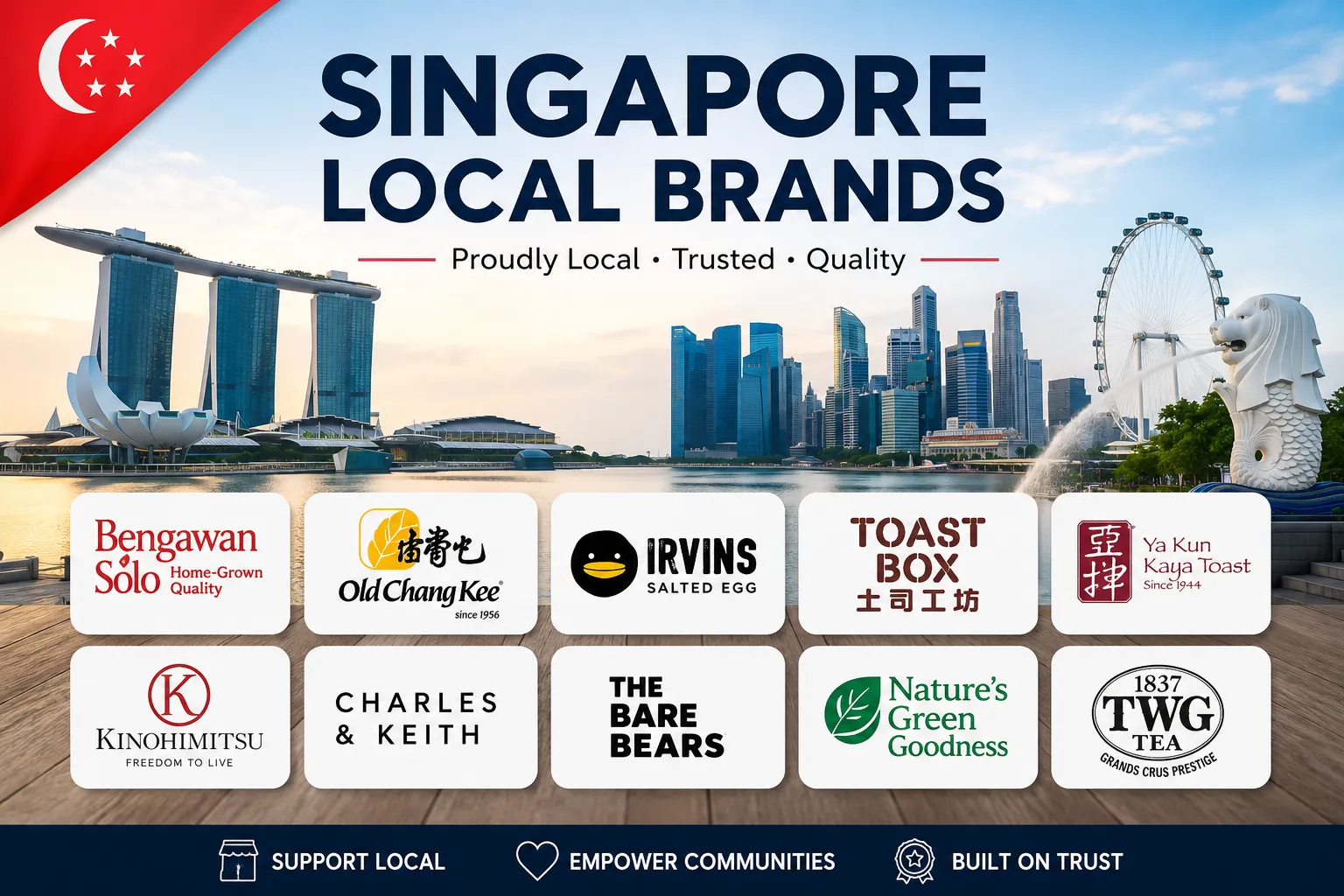
Singapore Local Brands: 15 Homegrown Names That Every Singaporean Should Know
Singapore may be known for its skyline, hawker culture, and global business presence, but there’s another side of the island that deserves attention — its growing community of homegrown brands.
From fashion labels creating modern designs to food companies reinventing traditional flavours, Singapore local brands have become an important part of the country’s identity. These businesses are not just selling products. They are sharing stories, culture, and a uniquely Singaporean point of view.
Over the years, many local brands have moved beyond neighbourhood popularity and gained recognition internationally. Some have built loyal communities online, while others have expanded into overseas markets.
Whether you’re looking for a meaningful gift, upgrading your wardrobe, trying new snacks, or supporting local entrepreneurs, these Singapore brands are worth knowing.
Here are some of the most interesting homegrown names making an impact today.
1. Charles & Keith – A Singapore Fashion Success Story
When people talk about successful Singapore local brands, Charles & Keith is often one of the first names mentioned.
Founded in 1996 by brothers Charles and Keith Wong, the brand started with a small footwear shop before growing into an international fashion label.
Today, Charles & Keith is recognised for its stylish handbags, shoes, and accessories that combine modern trends with affordable pricing. The brand has expanded across Asia, the Middle East, and other global markets.
What makes its journey special is how it proves that a Singapore-founded company can compete on the world stage. The designs are fashion-forward, but they still maintain a practical appeal for everyday wear.
2. Ya Kun Kaya Toast – A Taste Of Singapore’s Heritage
Some brands represent Singapore culture so strongly that they almost become part of daily life.
Ya Kun Kaya Toast is one such example.
Established in 1944, Ya Kun started as a small coffee stall selling kaya toast and traditional beverages. Today, it has become a familiar name for locals who enjoy a classic Singapore breakfast.
The combination of crispy toast, kaya spread, soft-boiled eggs, and kopi is simple — but deeply connected to Singapore’s food heritage.
As Singapore continues to modernise, brands like Ya Kun help preserve traditional flavours while introducing them to younger generations.
3. Love, Bonito – A Fashion Brand With Global Reach
Singapore’s fashion scene has changed significantly, and Love, Bonito has played a major role in that transformation.
Founded in 2010, the brand focuses on womenswear designed for Asian women. It understands local preferences, body types, and lifestyle needs — something that many international brands sometimes overlook.
Love, Bonito offers everything from workwear and dresses to casual outfits and maternity collections.
Its success comes from more than just clothing. The brand has built a strong community around confidence, individuality, and modern Asian femininity.
4. Bee Cheng Hiang – Traditional Snacks With A Modern Touch
Few Singapore snacks are as recognisable as bak kwa.
Bee Cheng Hiang has been producing this famous grilled meat snack for decades and has become a household name, especially during Chinese New Year celebrations.
The company has managed to keep traditional recipes alive while adapting to changing consumer tastes.
Today, Bee Cheng Hiang offers different flavours and gift packaging, making the product appealing to both locals and tourists.
It’s a great example of how Singapore local brands can preserve heritage while continuing to innovate.
5. Tiger Beer – Singapore’s Iconic Beverage Brand
Created in 1932, Tiger Beer is one of Singapore’s most recognised international brands.
The brand has long been associated with Singapore’s tropical lifestyle and social culture.
While Tiger Beer is now available globally, its roots remain closely connected to the country. It represents a piece of Singapore’s history and continues to appear at gatherings, celebrations, and local events.
6. RISIS – Celebrating Singapore’s Orchid Heritage
Singapore’s national flower, the orchid, has inspired many creative businesses.
RISIS transforms real orchids into gold and jewellery pieces using specialised preservation techniques.
The result is something quite unique — wearable art that combines nature, luxury, and Singapore’s cultural identity.
RISIS products are often chosen as premium gifts for visitors, diplomats, and special occasions.
7. The Editor’s Market – Affordable Everyday Fashion
The Editor’s Market has built a strong following among shoppers looking for stylish yet affordable clothing.
The brand focuses on simple, versatile designs that fit modern lifestyles.
From office outfits to weekend looks, its collections appeal to people who want fashionable pieces without complicated styling.
Its popularity shows how Singapore consumers increasingly support local alternatives to large international fashion chains.
8. TWG Tea – Bringing Singapore Tea Culture Worldwide
Luxury tea brand TWG Tea has become one of Singapore’s most recognised names globally.
Known for its elegant packaging, extensive tea collections, and premium tea salons, TWG Tea represents a more luxurious side of Singapore’s lifestyle industry.
Although tea culture has historical roots around the world, TWG Tea has created its own identity connected with Singapore’s image as a global city.
9. OSIM – Singapore’s Wellness Innovation Brand
Founded in Singapore in 1980, OSIM has become known for massage chairs and wellness technology.
The brand focuses on improving relaxation and health through innovative products.
OSIM’s growth reflects Singapore’s strength in combining technology, design, and consumer needs.
10. Supermama – Singapore-Inspired Lifestyle Products
Supermama creates lifestyle products inspired by Singapore’s culture and heritage.
Its porcelain collections often feature local symbols, architecture, and stories.
Instead of creating ordinary souvenirs, Supermama turns Singapore memories into beautifully designed objects.
It’s a reminder that local products can be meaningful, artistic, and practical at the same time.
Why Singapore Local Brands Matter
Supporting local businesses is about more than shopping.
Singapore local brands help create jobs, encourage entrepreneurship, and keep unique cultural ideas alive.
Many founders start with a simple idea: create something better, more relevant, or more personal for Singapore consumers.
And that’s what makes these brands interesting. They often understand local habits because they were built here.
A Singaporean fashion label knows the climate. A local food company understands familiar flavours. A lifestyle brand knows what makes the city special.
That connection creates authenticity.
The Future Of Singapore’s Homegrown Brands
Singapore’s startup and creative ecosystem continues to grow. More entrepreneurs are entering industries such as sustainable fashion, technology, beauty, food innovation, and design.
Social media has also changed the game. Smaller brands can now reach customers directly without needing traditional retail networks.
The next generation of Singapore local brands may come from unexpected places — a small online store, a home-based food business, or a creative studio.
But the foundation remains the same: understanding Singapore’s people and creating products with purpose.
Final Thoughts
From fashion and food to heritage products and wellness solutions, Singapore local brands show the creativity and ambition of the country’s entrepreneurs.
These brands tell Singapore’s story in their own ways. Some are built on tradition, others on innovation. Some have become global names, while others are still growing quietly.
But each one adds something valuable to the local landscape.
The next time you shop, eat, or look for a special gift, consider choosing a homegrown brand. You might just discover a product with a story behind it.