
Singapore Startup Funding: 10 Key Things Founders Should Know Before Raising Capital
Starting a business in Singapore is exciting, but turning a good idea into a growing company usually requires more than passion and hard work. Funding plays a huge role. Whether it’s hiring your first team members, building a product, expanding overseas, or investing in marketing, having the right financial support can change the direction of a startup.
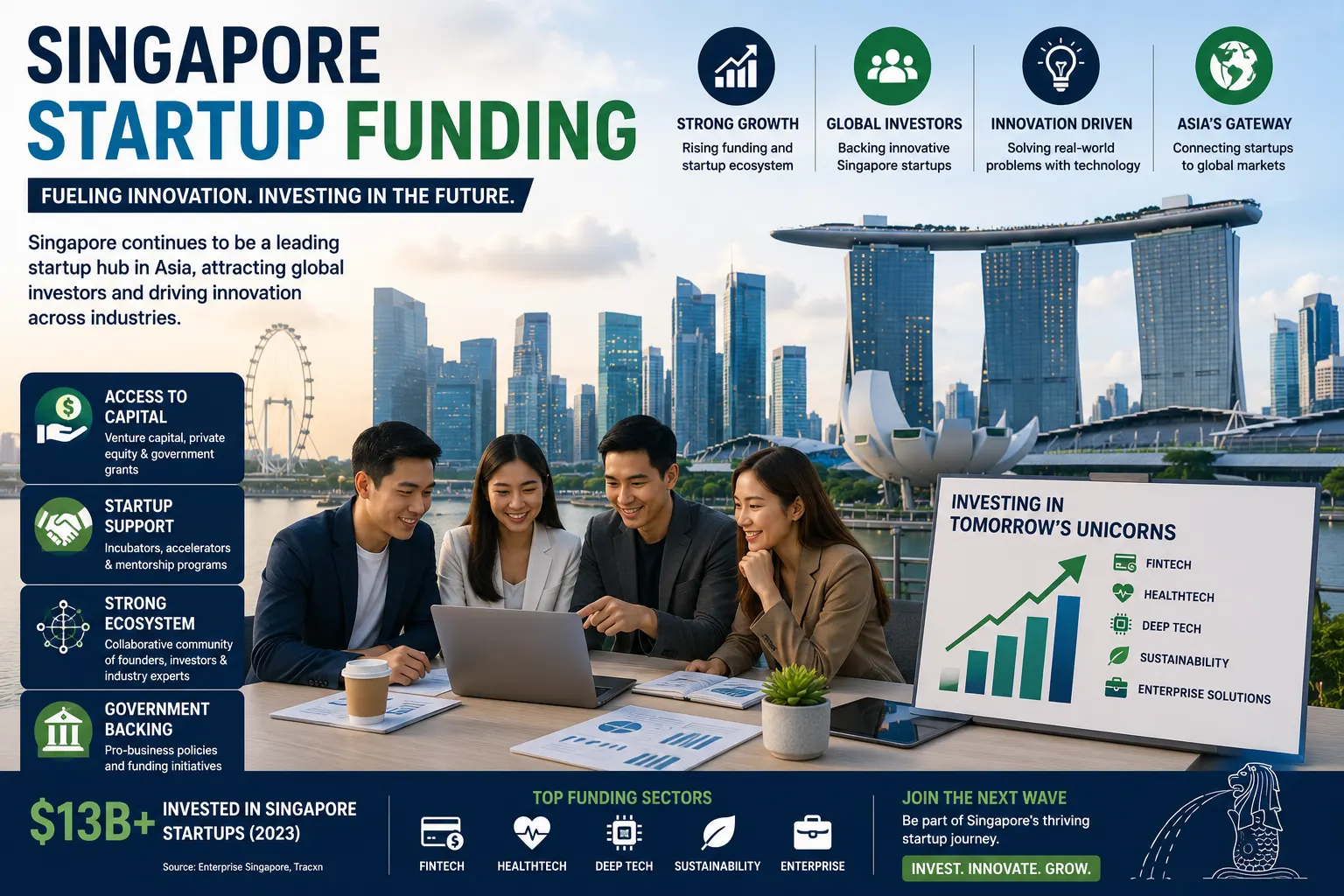
The good news? Singapore has built one of the strongest startup ecosystems in Asia. With government-backed programmes, angel investors, venture capital firms, accelerators, and corporate partnerships, founders have many opportunities to explore.
But raising money isn’t as simple as pitching an idea and receiving a cheque. Investors want to see potential, traction, a strong team, and a clear plan.
Understanding how Singapore startup funding works can help entrepreneurs make smarter decisions and avoid common fundraising mistakes. Here are the key things every founder should know.
1. Singapore Has One of Asia’s Most Supportive Startup Ecosystems
Singapore has become a major hub for innovation, technology, and entrepreneurship. Its strategic location, business-friendly policies, strong infrastructure, and access to regional markets make it attractive for both local and international founders.
Many startups choose Singapore as their headquarters because it provides access to Southeast Asia’s growing consumer market.
The ecosystem includes:
- Government startup grants
- Venture capital funding
- Angel investors
- Startup accelerators
- Incubators
- Corporate innovation programmes
- Research partnerships
For early-stage founders, this means there are multiple ways to secure financial support instead of relying only on personal savings.
And that’s important because many startups fail not because their ideas are bad, but because they run out of resources before reaching their next growth stage.
2. Government Grants Are Often the First Funding Option for Startups
One major advantage of building a company in Singapore is access to government-supported funding schemes.
Unlike traditional loans, many startup grants do not require founders to give away equity. This makes them especially attractive for early-stage businesses.
Some common funding support options include:
- Startup grants for innovation and technology development
- Enterprise support programmes
- Research and development funding
- Market expansion assistance
- Productivity improvement schemes
These programmes help startups test ideas, develop prototypes, improve operations, and enter new markets.
For first-time founders, grants can provide breathing room during the early stages. They allow entrepreneurs to focus on building a product and proving market demand before approaching investors.
However, getting approved usually requires preparation. A strong business proposal, realistic budget, clear objectives, and measurable outcomes matter.
3. Angel Investors Provide More Than Just Money
Angel investors are individuals who invest their personal funds into promising startups. They are often experienced entrepreneurs, business leaders, or industry professionals.
For many startups, angel funding becomes the bridge between an initial idea and larger venture capital rounds.
Angel investors usually look for:
- A strong founding team
- A unique business idea
- Market opportunity
- Early customer interest
- Growth potential
But there’s another benefit that founders sometimes overlook.
The right angel investor can bring valuable connections, industry knowledge, and mentorship. A founder may receive introductions to potential customers, partners, or future investors.
Of course, choosing an investor is not only about the amount of money offered. A good relationship matters because investors often become long-term advisors.
4. Venture Capital Funding Helps Startups Scale Faster
When startups move beyond the early stage, many turn to venture capital (VC) firms.
VC funding is designed for companies with high growth potential. Investors provide capital in exchange for equity ownership, expecting the company to grow significantly over time.
Singapore has attracted many regional and global venture capital firms because of its strong startup environment.
VC investors typically evaluate:
- Revenue growth
- Customer acquisition
- Market size
- Competitive advantage
- Business model
- Expansion opportunities
A startup receiving VC funding usually enters a faster growth phase. The company may hire more employees, expand internationally, improve technology, and strengthen its brand.
But venture capital is not suitable for every business.
Some companies can grow successfully through revenue, partnerships, or smaller investments. Taking VC money also means accepting investor involvement and pressure to achieve aggressive growth targets.
5. Startup Accelerators Can Open Doors to Funding Opportunities
Accelerators are programmes designed to help startups grow through mentorship, training, networking, and sometimes direct investment.
For early-stage founders, joining an accelerator can be extremely valuable.
Benefits often include:
- Business coaching
- Investor introductions
- Pitch training
- Networking opportunities
- Access to startup communities
- Product development support
Many investors pay attention to accelerator-backed companies because these startups have usually gone through structured evaluation and mentoring.
A strong accelerator programme can help founders refine their business model and prepare for fundraising conversations.
Sometimes the biggest value isn’t the funding itself — it’s learning how investors think.
6. A Strong Pitch Matters More Than a Great Idea Alone
Many founders believe investors only care about the idea. In reality, investors invest in execution.
A good startup pitch should clearly explain:
- What problem the company solves
- Who the customers are
- Why the solution is different
- How the company makes money
- Current progress and achievements
- Future growth plans
Investors hear hundreds of pitches. A founder needs to quickly explain why their startup deserves attention.
Numbers help.
Instead of saying “many people need this service,” show customer growth, sales figures, user engagement, or market research.
A simple, clear story often works better than a complicated presentation filled with industry jargon.
7. Founders Should Understand Equity Before Accepting Funding
Funding can accelerate growth, but it comes with trade-offs.
When investors provide money, they usually receive ownership in the company. This means founders need to carefully consider how much equity they are willing to give away.
Important questions include:
- How much funding is actually needed?
- What percentage of ownership is reasonable?
- What value does the investor bring besides money?
- How will future funding rounds affect ownership?
Giving away too much equity too early can create challenges later.
At the same time, keeping 100% ownership is not always the best choice if additional funding can help the company grow much faster.
It’s about finding the right balance.
8. Building Investor Confidence Requires Preparation
Before approaching investors, startups should organize their important documents and information.
Common preparation includes:
- Business plan
- Financial projections
- Market research
- Product information
- Customer data
- Company structure details
- Growth strategy
Investors want confidence that founders understand their numbers and market.
A startup doesn’t need to be perfect. No company is. But founders should demonstrate that they understand their risks and have a realistic plan.
Being transparent also helps build trust.
9. Singapore Startups Should Think Beyond Local Growth
Singapore’s small domestic market means many startups eventually look toward regional expansion.
Investors often find companies more attractive when they have plans to grow beyond Singapore.
Popular expansion markets include:
- Malaysia
- Indonesia
- Thailand
- Vietnam
- Philippines
A startup that can demonstrate regional potential may have stronger fundraising opportunities.
However, expansion should happen strategically. Entering new markets without understanding local customers, regulations, and competition can become expensive.
Growth is important, but sustainable growth matters more.
10. The Future of Singapore Startup Funding Looks Promising
Singapore continues to strengthen its position as a startup and innovation hub.
Emerging areas such as artificial intelligence, fintech, sustainability, health technology, cybersecurity, and deep technology are attracting increasing interest from investors.
For entrepreneurs, opportunities are growing — but competition is growing too.
Successful fundraising will require more than a creative idea. Founders need strong execution, market understanding, financial discipline, and the ability to adapt.
The startup journey is rarely straightforward. There will be challenges, unexpected changes, and moments of uncertainty.
But with the right preparation and funding strategy, Singapore offers one of the best environments in Asia for ambitious businesses looking to grow.
Final Thoughts
Singapore startup funding offers many opportunities for entrepreneurs at different stages, from early ideas to fast-growing companies.
Government support, angel investment, venture capital, and accelerator programmes provide multiple pathways for founders to access capital.
The key is choosing the right funding option at the right time.
Money can help a startup grow, but a clear vision, strong team, and deep understanding of customers are what create long-term success. For founders willing to learn, adapt, and keep moving forward, Singapore remains an exciting place to build the next generation of businesses.